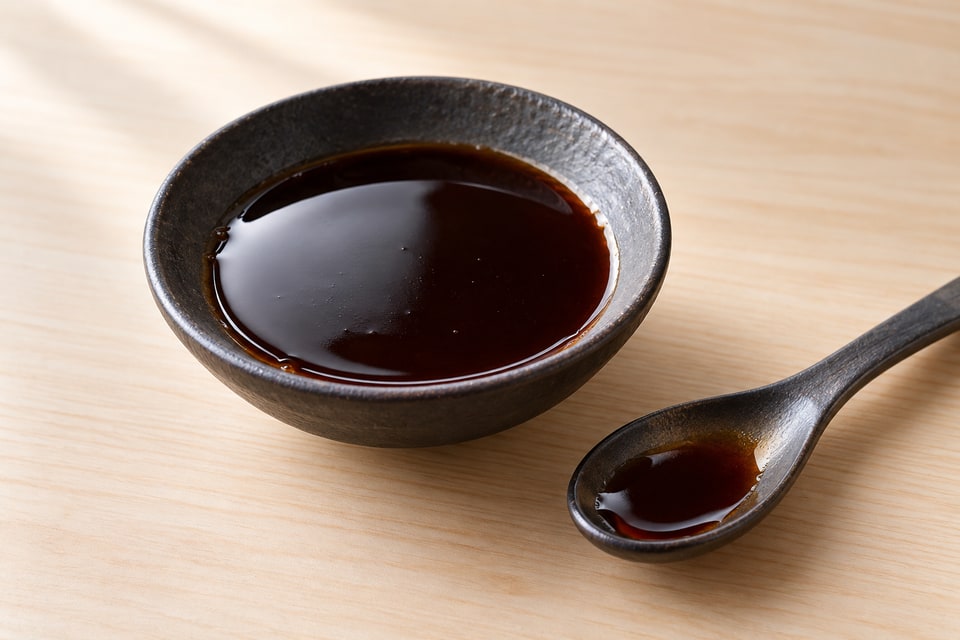
Building Nikiri: The Soy-Mirin-Dashi Brushing Sauce
Nikiri (nikiri-joyu) is the sushi bar's brushing soy: soy sauce gently simmered with mirin (and often sake or dashi) just long enough to cook off the alcohol and round the flavor—it stays thin and is brushed lightly on nigiri. The basic ratio is 1 cup soy sauce, 1/2 cup mirin, 1/2 cup dashi, simmered gently for just a few minutes; do not boil it hard or reduce it heavily, which degrades the soy's aroma. The thick, glossy sweet glaze applied to anago (sea eel), shellfish, and shako is a different sauce entirely: nitsume (tsume), made by reducing the eel or clam simmering broth with soy, sugar, and mirin to a syrup-like consistency that clings to food without running off the plate. Keeping the two distinct matters: nikiri seasons and glosses nigiri without masking the fish, while nitsume delivers concentrated sweetness to cooked toppings. Testing and tasting allows you to achieve your preferred balance and flavor intensity.
Tare Variations and Regional Styles
Beyond basic nikiri, there are regional and restaurant-specific sauce variations. Some chefs add sake (rice wine) for alcohol content and complexity. Others add sugar (though mirin already provides sweetness). Some incorporate ginger, garlic, or shichimi togarashi (seven-spice blend) for heat. The Kansai region of Japan has a particularly sweet tare, while Edomae (Tokyo-style) is more restrained. Each establishment develops a house tare that becomes part of their identity. A tare that's too sweet appeals to certain diners but alienates sushi purists. A tare that's too savory might seem thin or underdeveloped. The balance is an art form. Some establishments maintain tare recipes as closely-guarded secrets, knowing that their signature sauce is a key competitive advantage.
Ponzu and Citrus-Infused Alternatives
Ponzu is a lighter, citrus-forward sauce made from soy sauce, mirin, dashi, and fresh citrus juice (lemon, lime, yuzu, or a combination). The ratio is typically 3 parts soy, 1 part mirin, 1 part dashi, and 1 part fresh citrus. This produces a bright, acidic sauce that complements fatty and rich items beautifully. Ponzu is often served alongside dipping-style sushi items rather than brushed on. The acidity of citrus cuts through richness, so ponzu pairs particularly well with fatty toro or mackerel. Yuzu-joyu (yuzu juice mixed with high-quality soy) is an even simpler sauce—just two ingredients—that highlights the citrus and allows the soy's subtle flavors to shine. These lighter sauces appeal to diners seeking brightness rather than richness. A restaurant offering both nikiri and ponzu gives diners agency over their flavor experience.
Pre-Seasoning at the Counter
In high-end omakase settings, the sushi chef applies nikiri or other seasoning directly to pieces before serving them to the diner. This practice—called pre-seasoning—eliminates the need for customers to have access to soy sauce and allows the chef to control the flavor experience precisely. A piece of nigiri might be lightly brushed with nikiri. A piece of aged fish might receive a tiny dab of yuzu-joyu. A piece of scallop might be fully glazed. This level of control requires the chef and diner to be in a direct, communicative relationship, typically in an omakase ("trust me") format. The customer receives what the chef has determined is optimal for that specific ingredient at that specific moment. This practice is considered sophisticated because it assumes the diner will enjoy the chef's judgment and flavor choices. It also practically prevents the common diner error of over-salting with soy sauce.
Ratio Formulas and Batch Preparation
Once you've identified your preferred sauce ratios, document them precisely. A head chef might write: "Nikiri: 200ml soy, 100ml mirin, 100ml dashi, simmer gently 2 to 3 minutes to cook off the alcohol." This precision allows consistency and allows substitution chefs to recreate the sauce identically. Sauces are typically batch-prepared at the beginning of service and held warm (not hot) in small containers during service. Some establishments make fresh sauce daily; others make multiple batches during the week and refrigerate them, reheating as needed. Batch preparation requires calculating volumes based on expected service volume. Under-preparing means running out mid-service; over-preparing means sauce spoils. Most sauces keep refrigerated for 5 to 7 days. Sauces with fresh citrus (like ponzu) should be made fresh daily for optimal flavor.
Application Technique and Timing
The technique of applying sauce affects the final product. Nikiri brushed onto warm fish creates a glossy finish and allows the sauce flavors to meld slightly with the fish's surface. Sauce applied to cold fish sits atop rather than infusing. Ponzu applied to room-temperature items creates a brighter contrast than when applied to warm items. A sushi chef develops precise technique for each sauce and each use case. Some pieces receive sauce applied with a small brush, others with a spoon, others with the chef's fingers (dipped in sauce then touching the piece). The amount of sauce varies: a nigiri might receive just a touch, while an eel-topped nigiri might be generously coated. These applications are performed with the intention of the chef, responding to the specific piece and the diner's apparent preferences.
Keep these details in mind.
- Nikiri is gently simmered seasoned soy for brushing nigiri; nitsume is the thick reduced glaze for eel and shellfish
- Regional variations and house recipes add complexity; sweet tare (Kansai) vs. restrained (Edomae) reflect local traditions
- Ponzu (citrus-forward) and yuzu-joyu (citrus-soy) are lighter alternatives that brighten fatty items
- Pre-seasoning at the counter gives the chef control and eliminates customer access to excess soy sauce
- Document ratios precisely for consistency; batch-prepare sauces and hold warm (not hot) during service
From reading to cooking.
Eel Sauce (Unagi Tare) · Perfect Sushi Rice
Return to the journal ↗