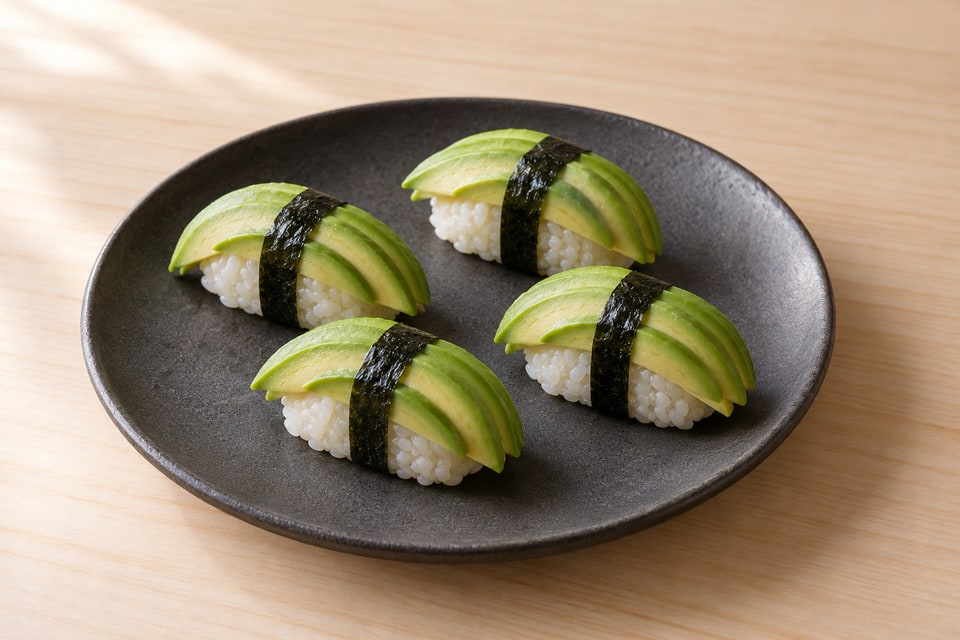
Avocado Nigiri
Avocado nigiri offers a quiet vegetarian study in rice shaping. The fruit should be firm-ripe and cut into thin overlapping slices that follow the base without being pressed into paste.
Open recipeThe Sashimee collection
Fifty complete recipes. Choose a familiar favorite, or learn something new.
Avocado nigiri offers a quiet vegetarian study in rice shaping. The fruit should be firm-ripe and cut into thin overlapping slices that follow the base without being pressed into paste.
Open recipe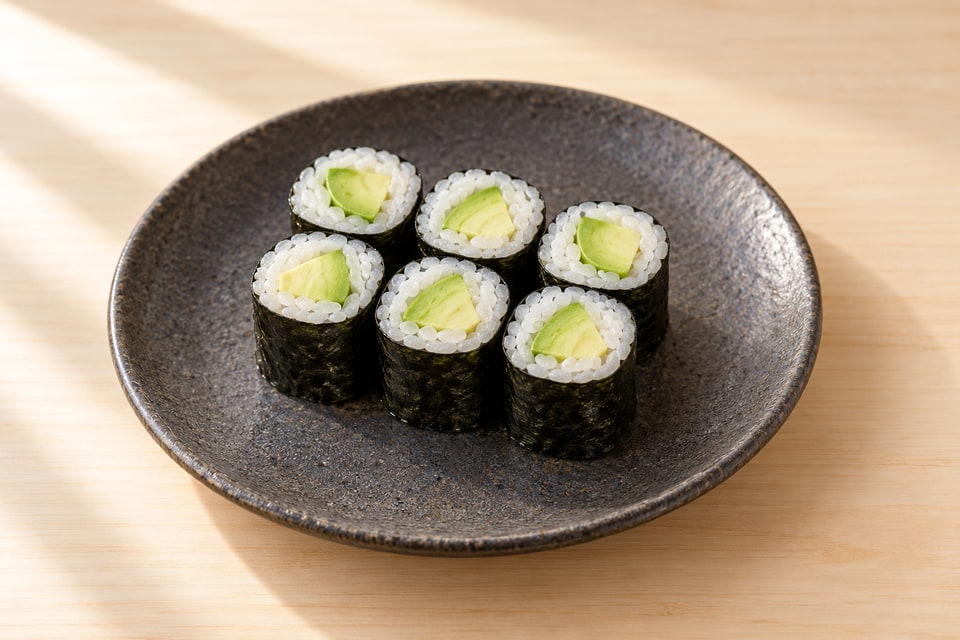
Avocado maki replaces the fish’s soft richness with ripe fruit. The avocado should yield to gentle pressure but still cut into defined slices. A bruised or overripe fruit makes a paste before the mat is lifted.
Open recipe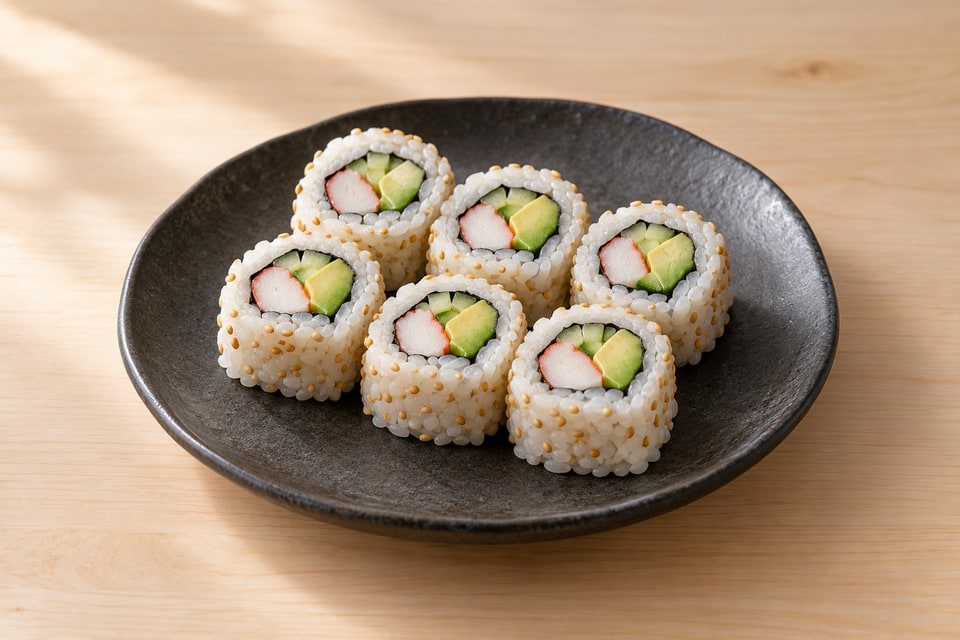
California roll is a modern rice-outside roll, with crab, cucumber, and avocado forming a soft-and-crisp center.
Open recipe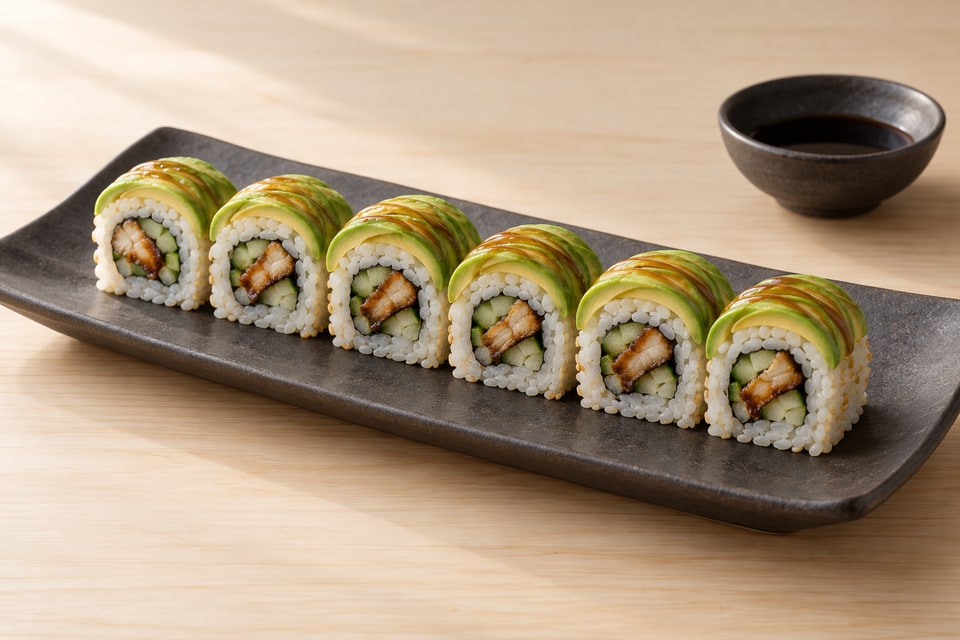
Caterpillar roll places thin avocado slices over a cooked-eel-and-cucumber center. The pattern depends on overlapping slices that bend, not on a large pile of fruit.
Open recipe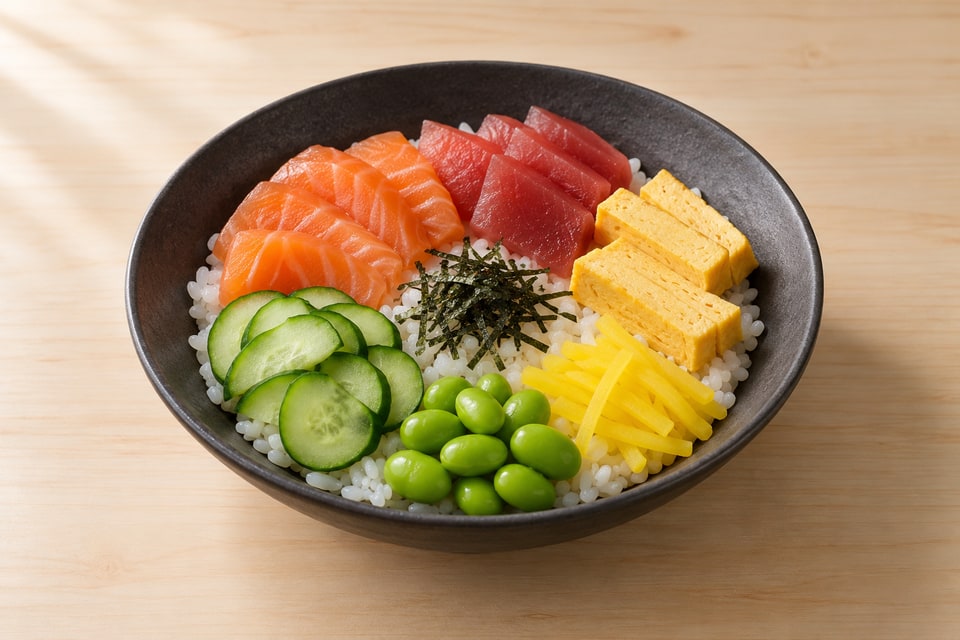
Chirashi brings several toppings together over seasoned rice without requiring a roll. This home bowl uses a small raw-fish assortment, a cooked omelet, and ready-to-eat vegetables. Each component stays in its own group.
Open recipe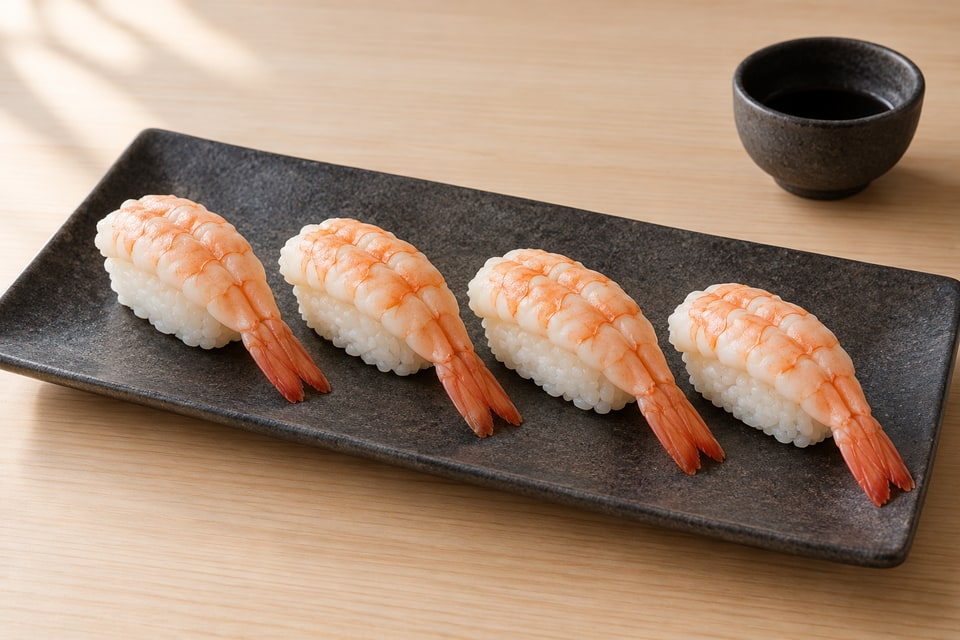
Cooked shrimp nigiri is a useful lesson in shaping because the topping is firm enough to handle and every part can be fully cooked.
Open recipe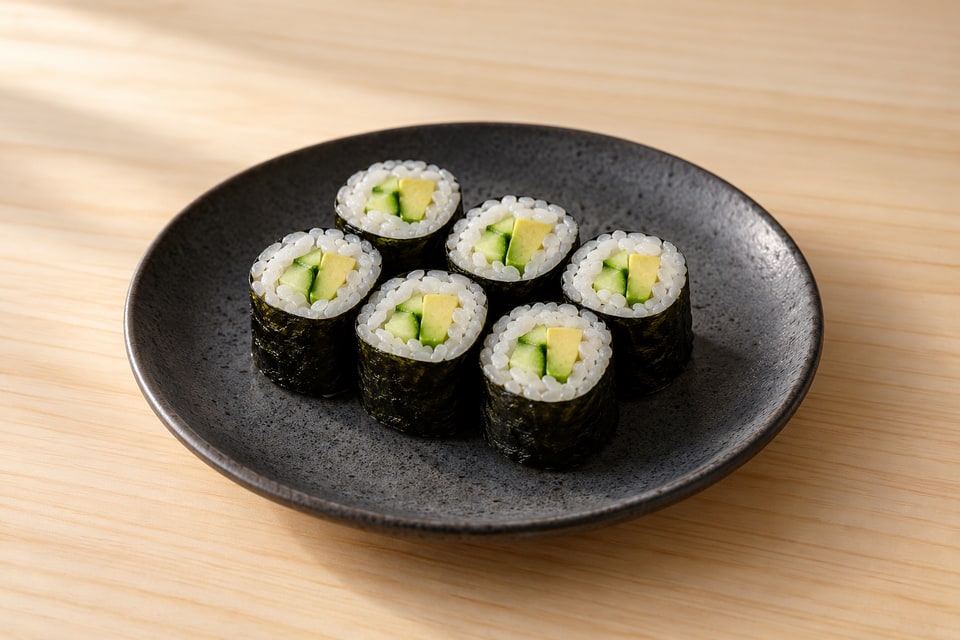
Cucumber avocado roll combines a crisp line with a soft one. The cucumber’s wet seed core is removed, and the avocado is firm-ripe rather than collapsing into paste.
Open recipe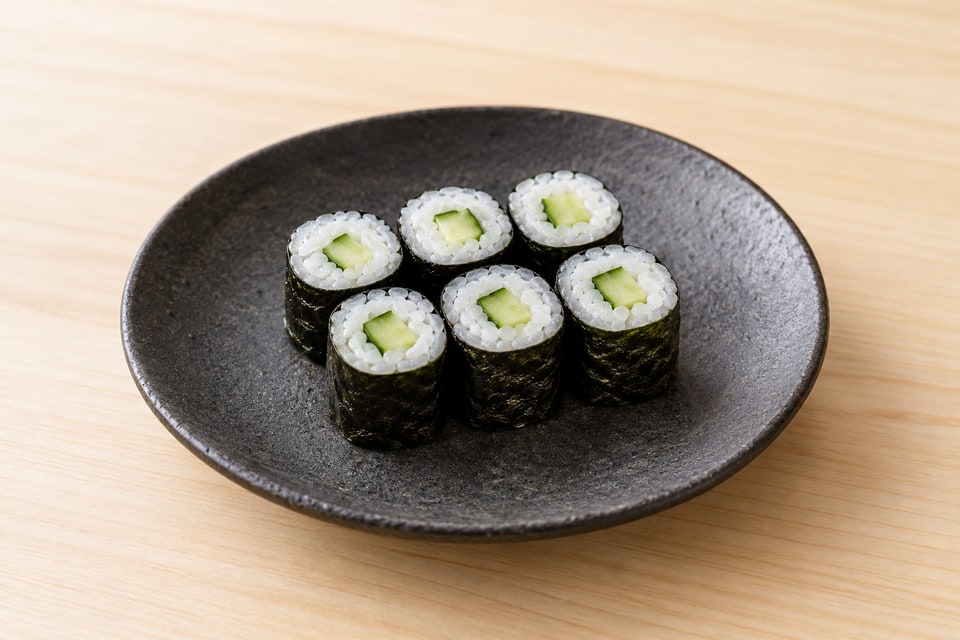
Kappa maki is a small test of texture. The cucumber should be cool and crisp, with the watery seed core removed, while the rice remains soft enough to yield.
Open recipe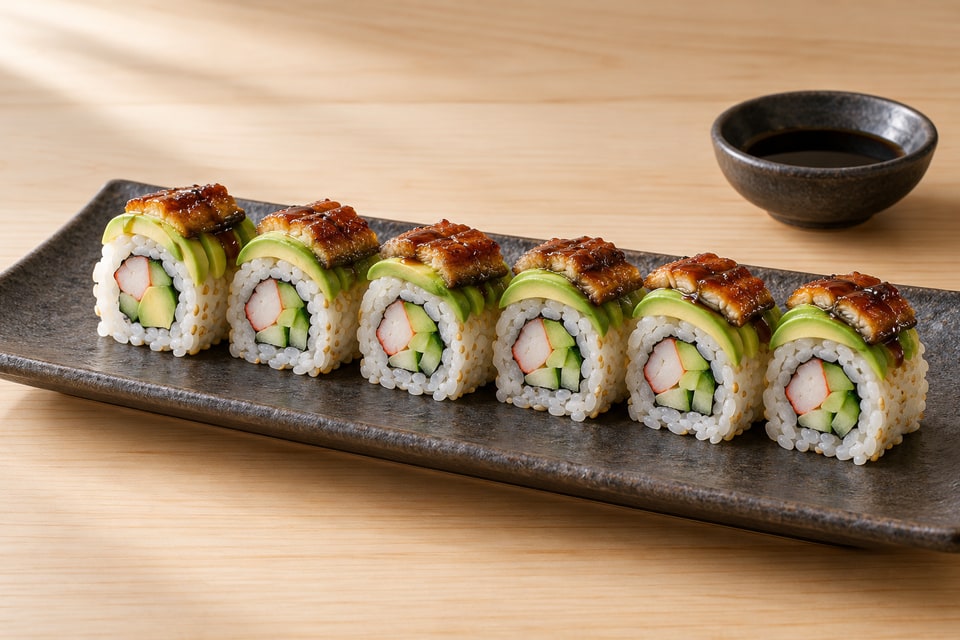
Dragon roll is a modern decorated roll with several restaurant variations. This home version follows the site’s cooked-eel direction: a crab-and-cucumber center, warm prepared eel, and a thin avocado cover.
Open recipe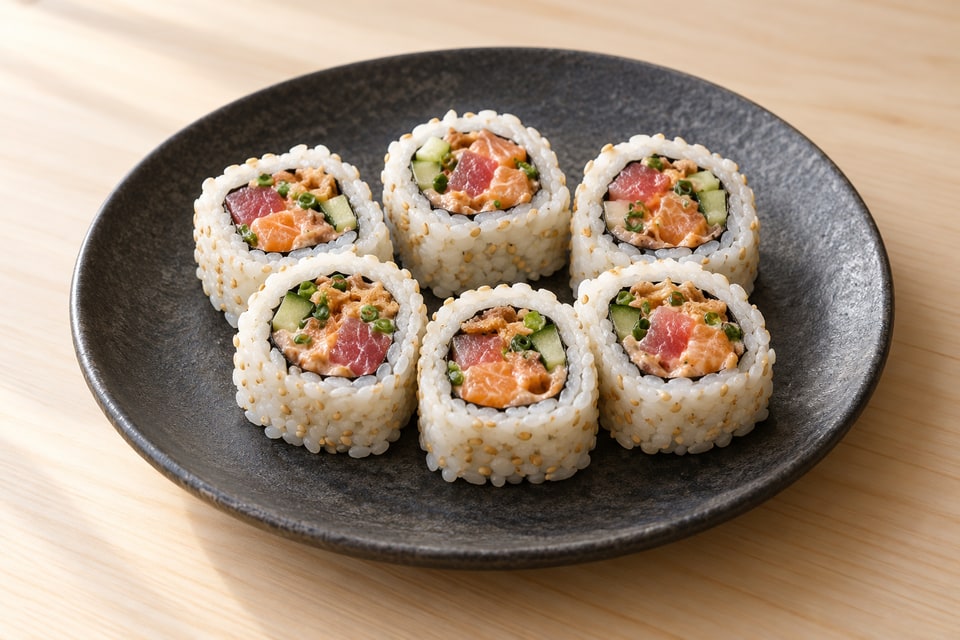
Dynamite roll has no single universal filling. This version follows the site’s spicy chopped tuna-and-salmon direction, with crisp fried onion added at the last moment.
Open recipe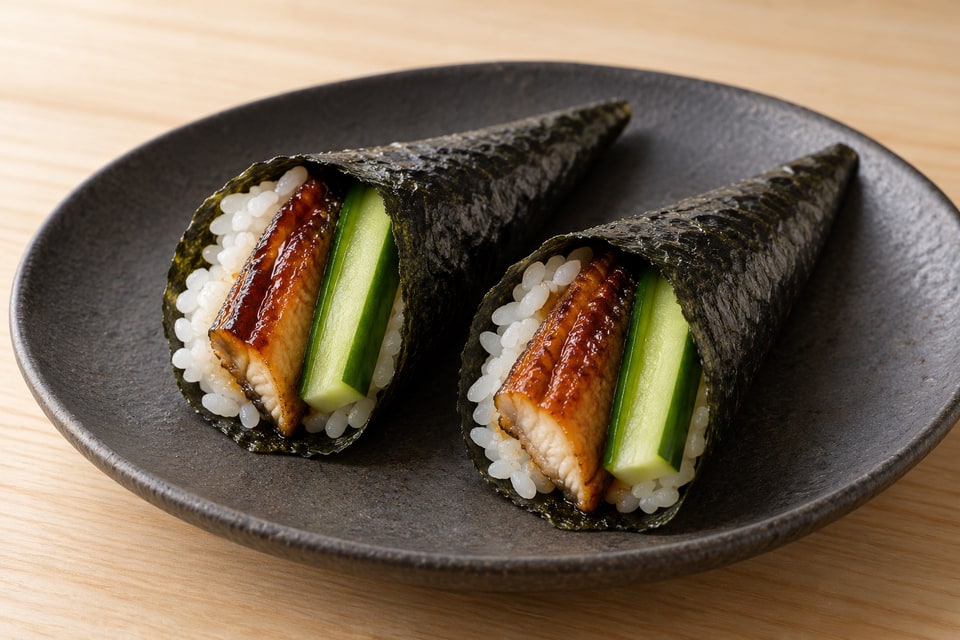
Eel cucumber temaki uses warm, fully cooked kabayaki eel beside a crisp cucumber strip. The sweet glaze should be a light brush, not a liquid filling.
Open recipe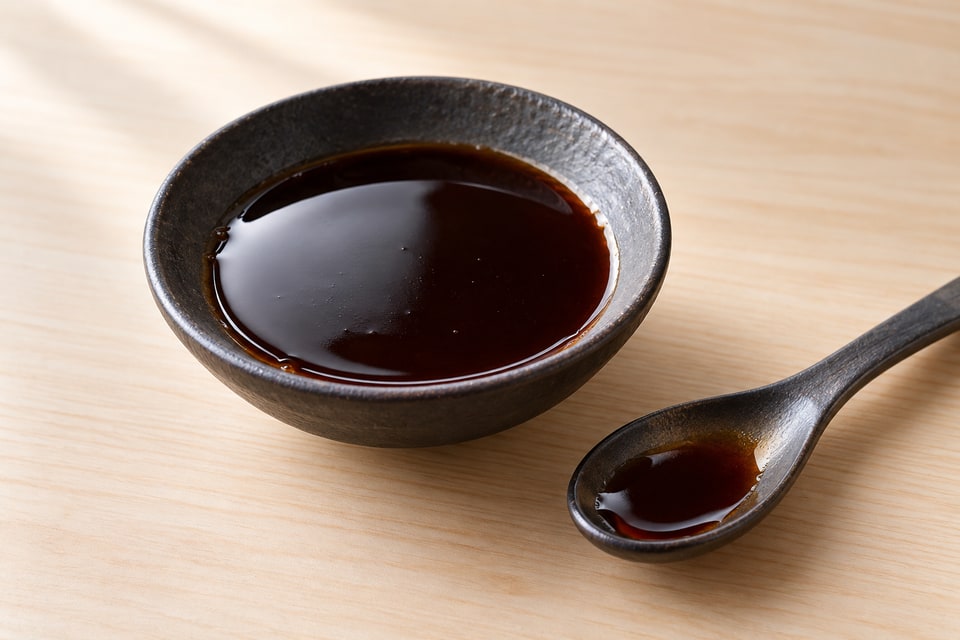
Unagi tare is a sweet soy glaze used sparingly on fully cooked eel. This home sauce contains no eel; the name describes its use.
Open recipe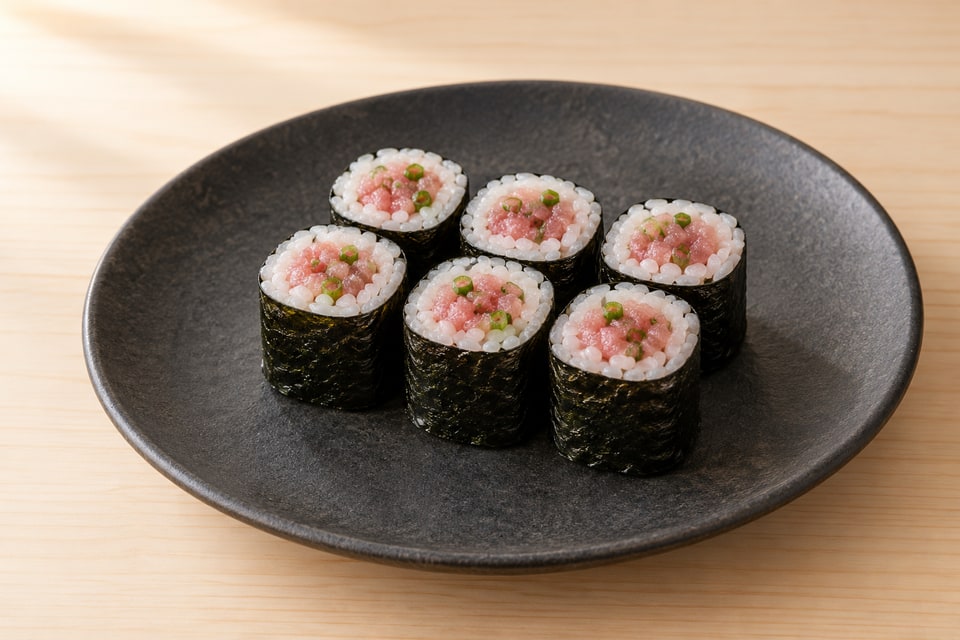
Negitoro maki combines finely chopped fatty tuna with scallion. The softness of the filling is deliberate, but it should remain a chopped fish mixture rather than a mayonnaise spread.
Open recipe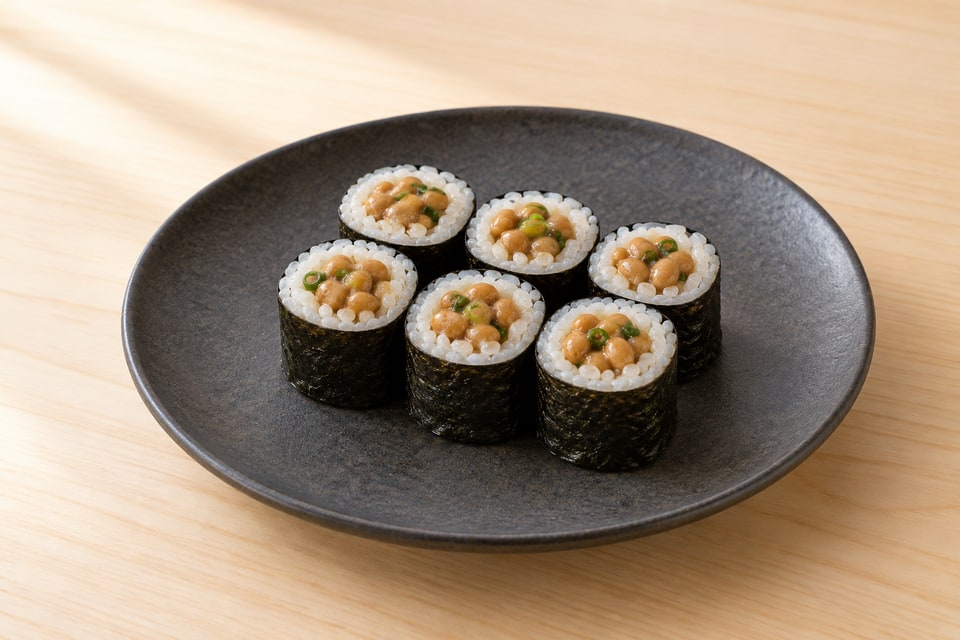
Natto maki uses purchased fermented soybeans, stirred briefly to distribute their characteristic sticky threads. The filling is assertive, so the nori and rice should remain clean and spare. Scallion gives a fresh edge.
Open recipe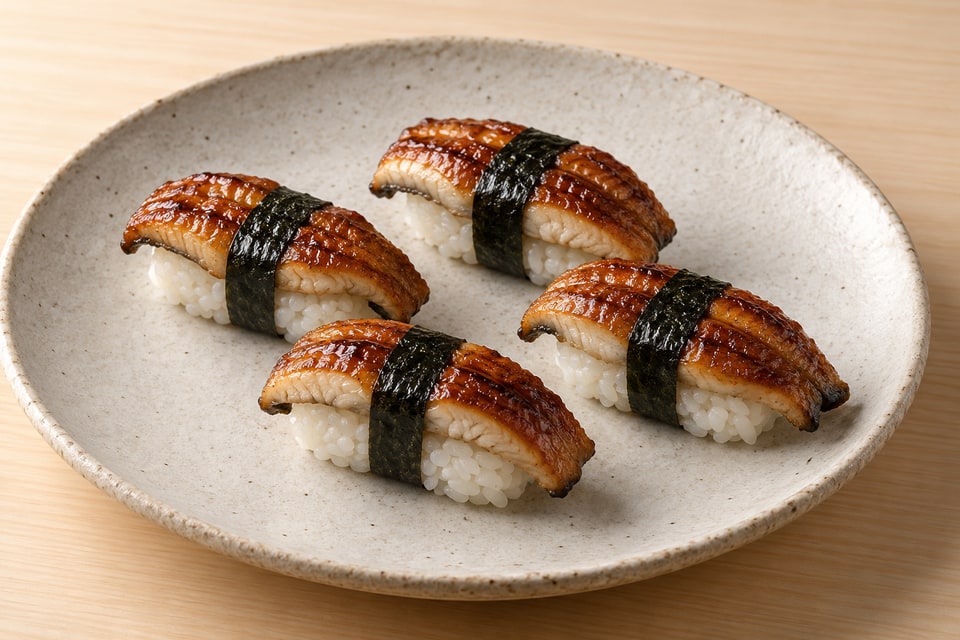
Unagi nigiri uses fully cooked eel. The rich flesh is commonly sold already grilled and glazed as kabayaki, which makes the home recipe a careful reheating and portioning task.
Open recipe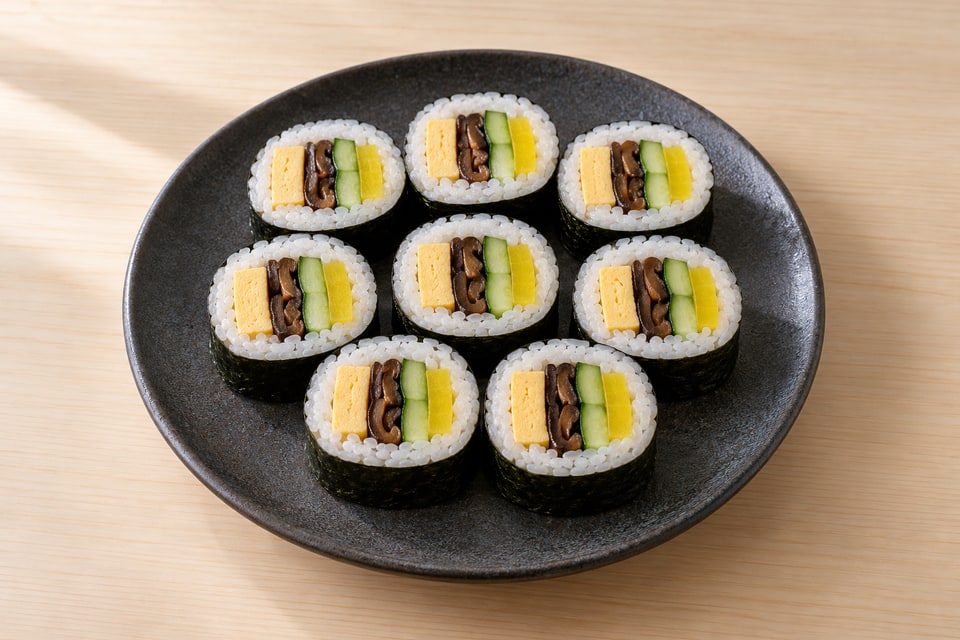
Futomaki allows several filling lines, but its broad cross-section should remain clear. This home version uses fully cooked egg, drained simmered shiitake, cucumber, and pickled radish.
Open recipe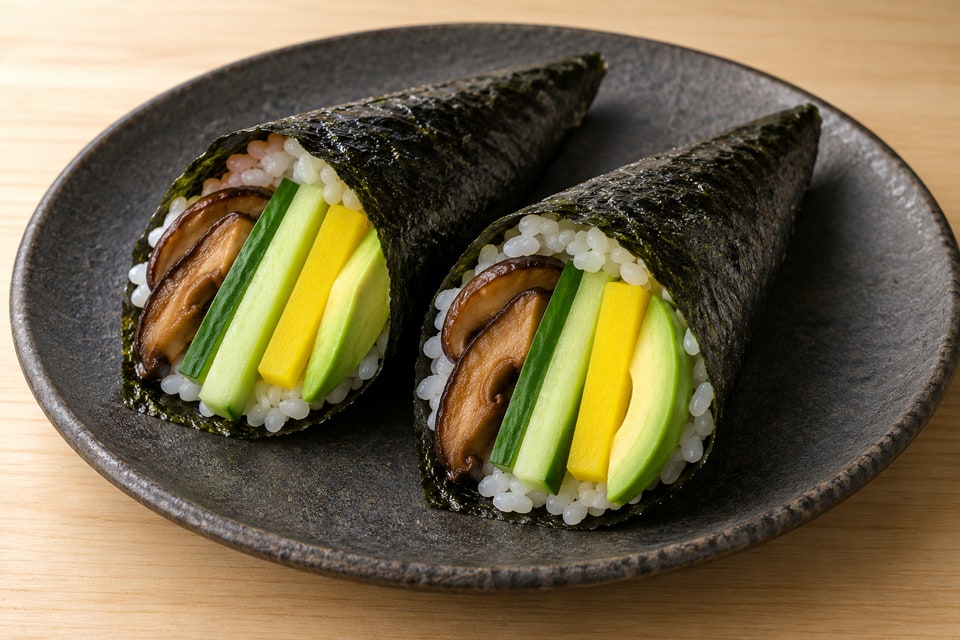
Garden vegetable temaki should offer more than one soft texture. This version uses crisp cucumber, pickled radish, sautéed shiitake, and a restrained avocado line. The mushrooms are cooled and drained before rolling.
Open recipe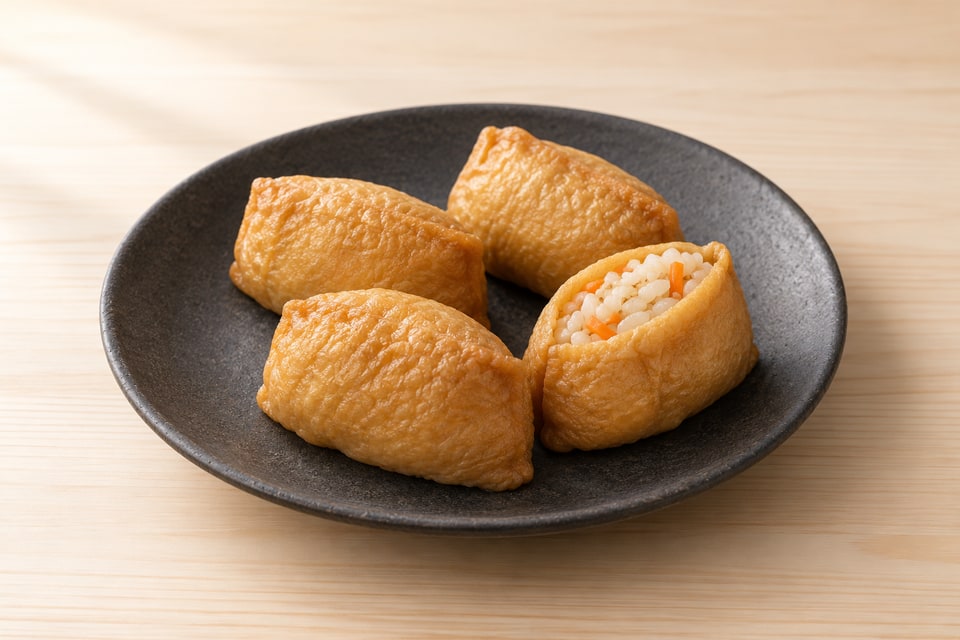
Inari sushi fills tender seasoned tofu pockets with softly gathered rice. The fried tofu has been simmered, so the finished pocket is soft rather than crisp.
Open recipe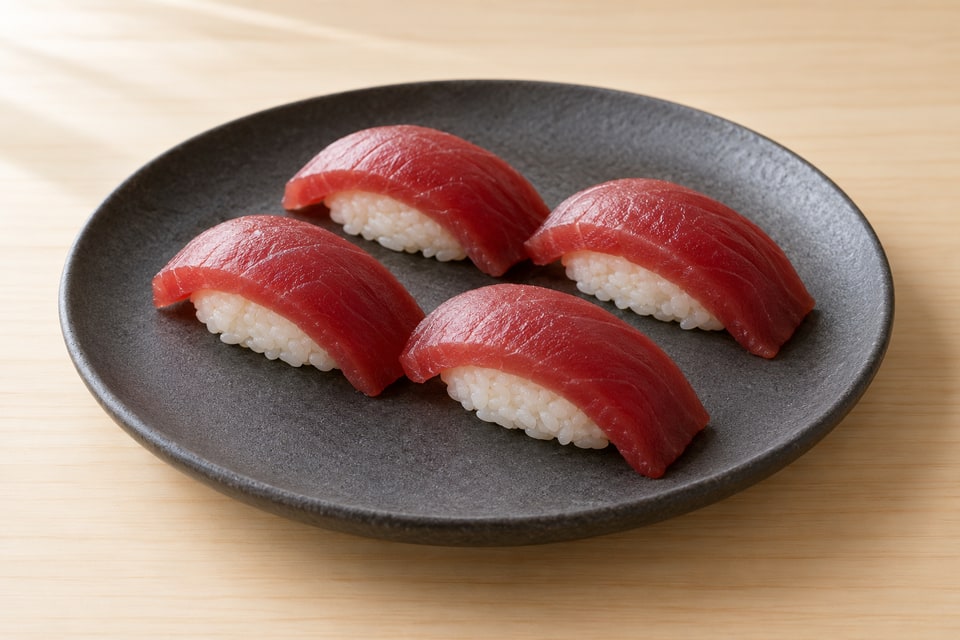
Lean tuna, or akami, is judged by a quiet cut. Its muscular grain is more apparent than salmon’s, and a sinewy strip remains chewy no matter how finely it is arranged.
Open recipe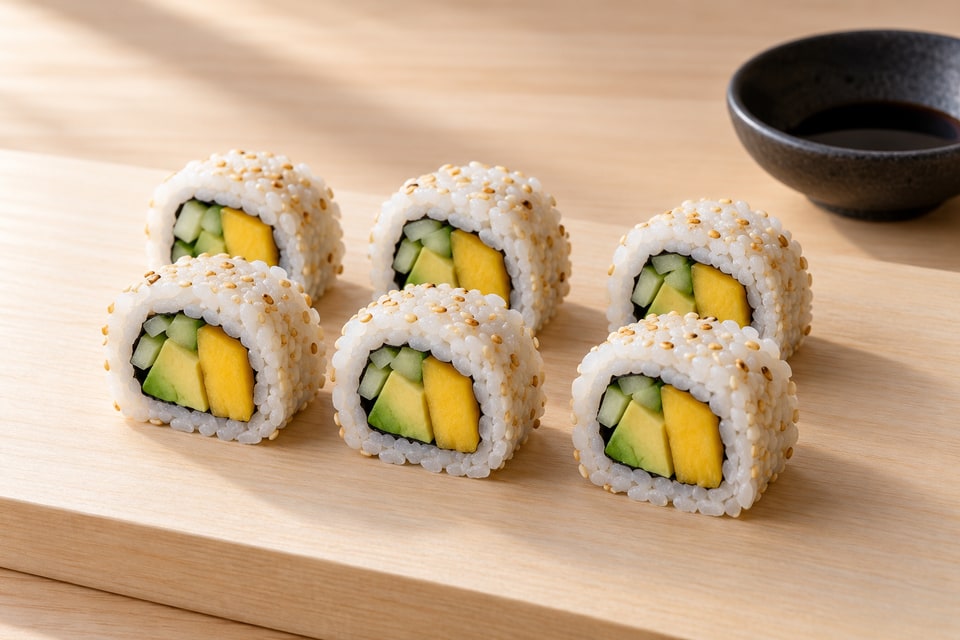
Mango avocado roll is a modern fruit-and-vegetable variation, with sweetness balanced by seasoned rice and nori. The mango should be ripe but firm enough for a clean strip. Very soft fruit leaks juice into the center.
Open recipe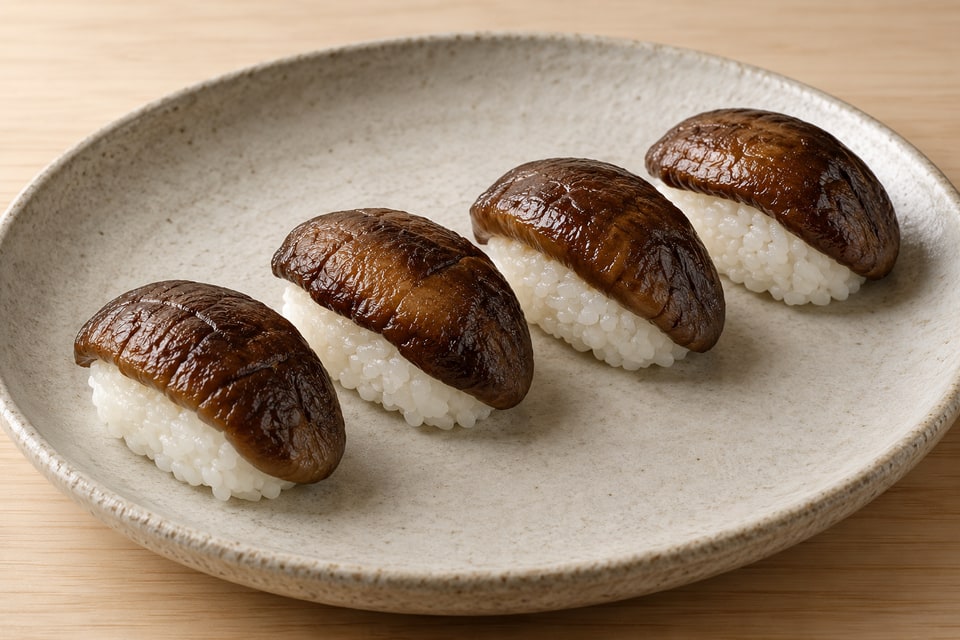
Marinated shiitake nigiri uses a cooked mushroom cap whose savory seasoning has been absorbed and drained. The cap should bend over the rice without releasing syrup.
Open recipe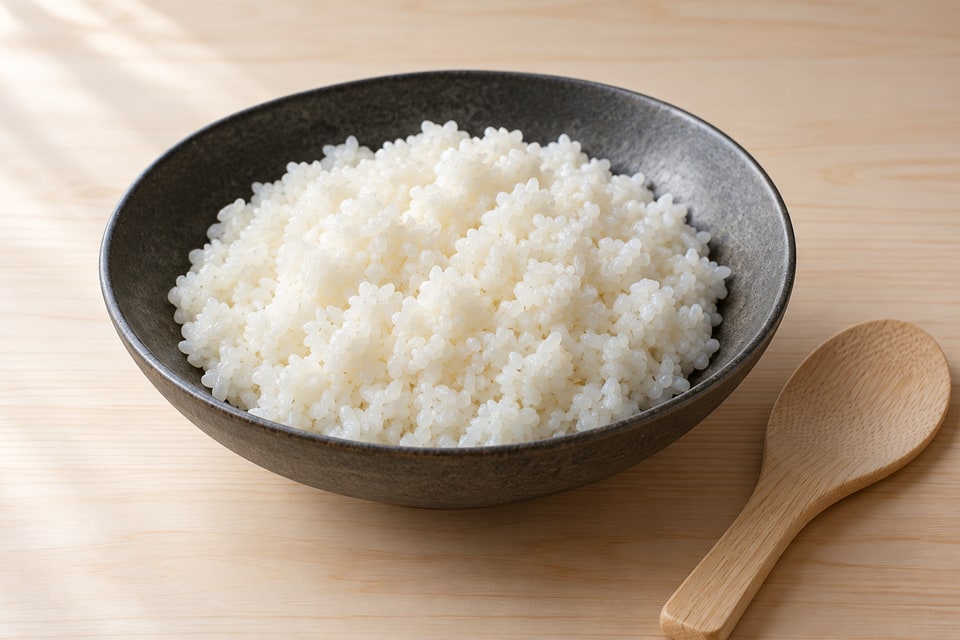
Before the knife, before the fish, before the roll — there is rice.
Open recipe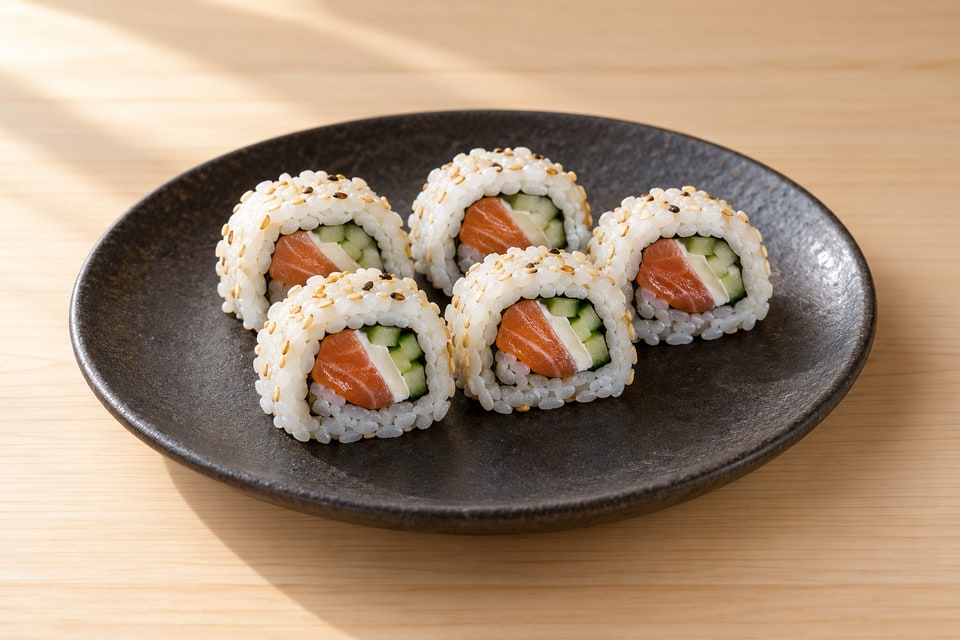
Philadelphia roll pairs salmon with cream cheese and crisp cucumber. It is a modern adaptation rather than a claim about a traditional Japanese filling.
Open recipe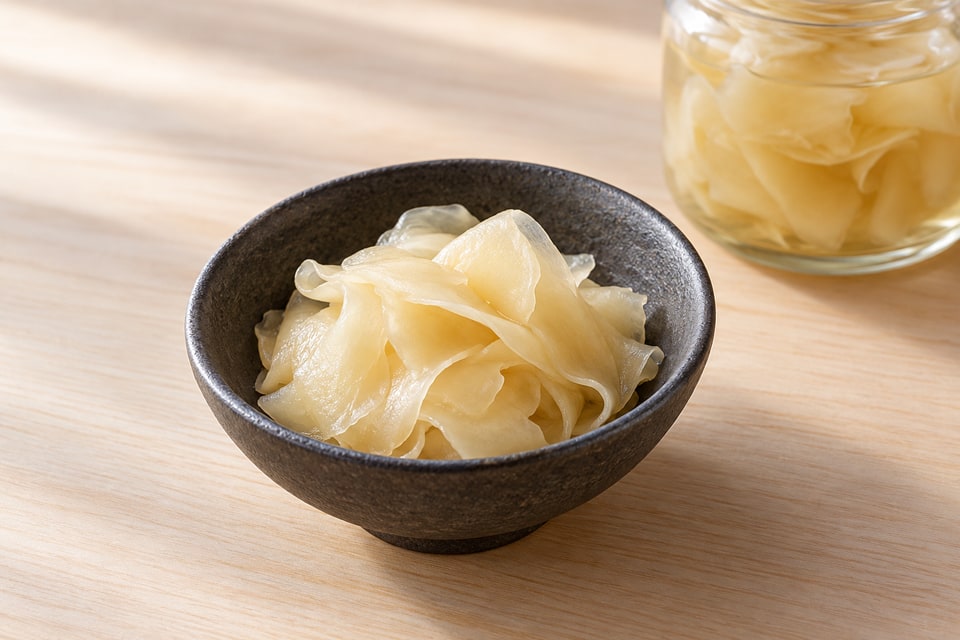
Pickled ginger, or gari, refreshes the palate between sushi bites. It does not make raw fish safer.
Open recipe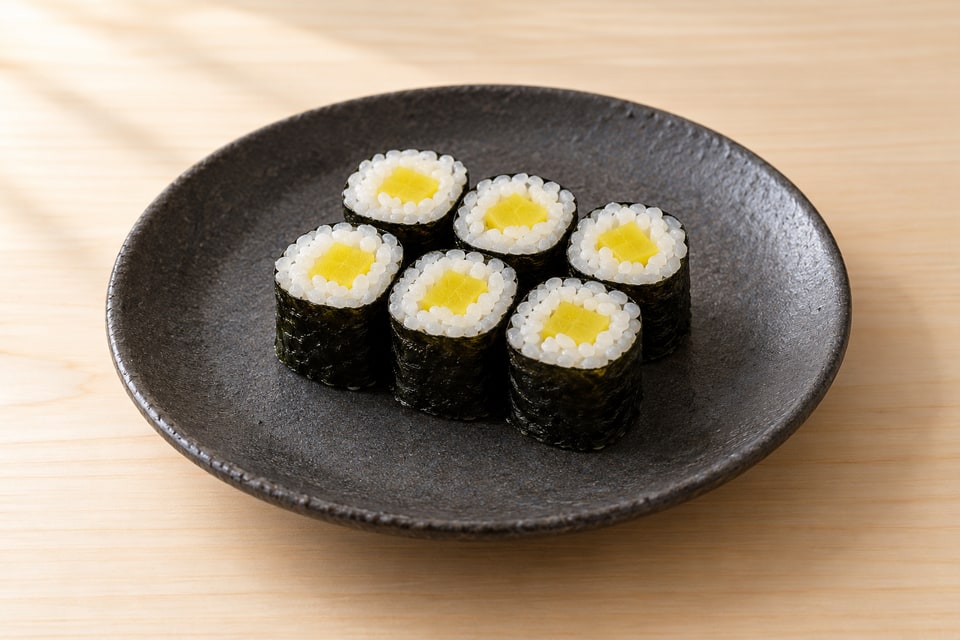
Oshinko maki is a quiet, crisp roll built around pickled radish. Commercial takuan varies in sweetness, salt, and firmness, so taste it before reaching for soy sauce.
Open recipe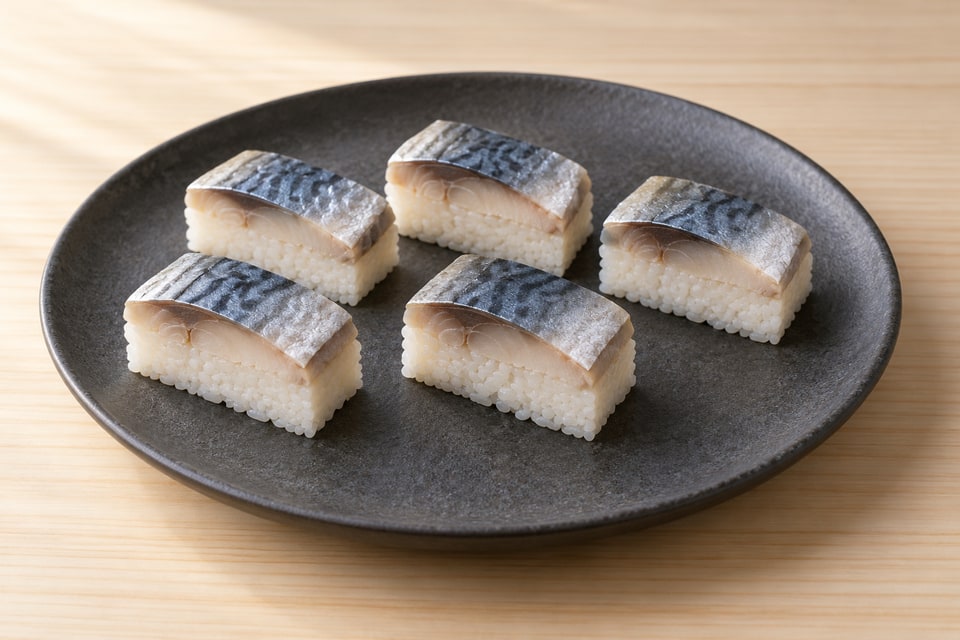
Pressed mackerel sushi layers supple prepared fish over softly pressed rice. This home version buys commercially prepared ready-to-eat shime saba rather than improvising the source’s short salt-and-vinegar treatment.
Open recipe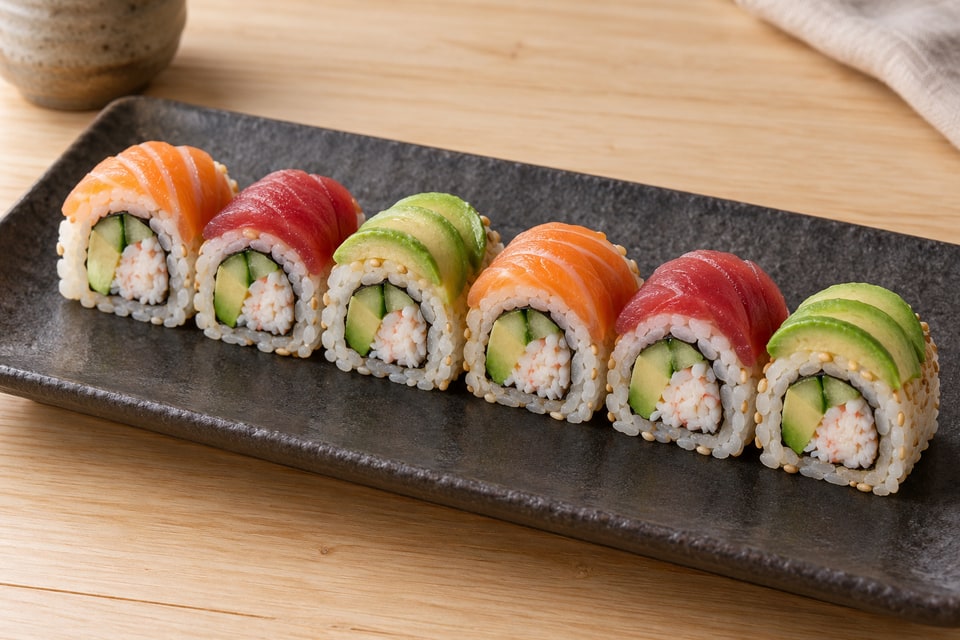
Rainbow roll is a modern decorated California-style roll with thin seafood slices laid over the rice exterior. The colors should come from distinct ingredients rather than heavy sauces.
Open recipe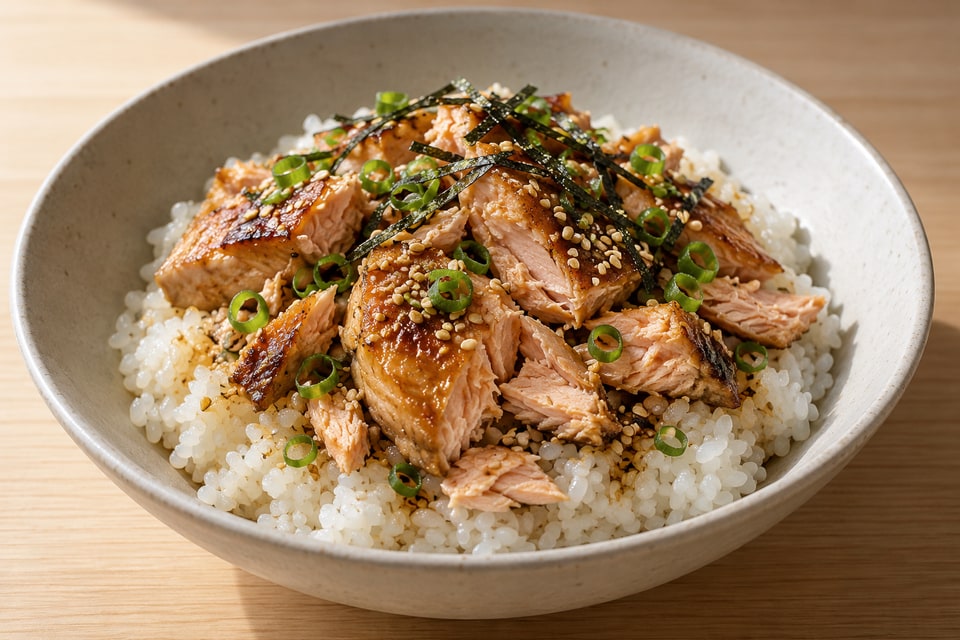
This salmon donburi is a cooked rice bowl with a measured soy, mirin, and sake glaze.
Open recipe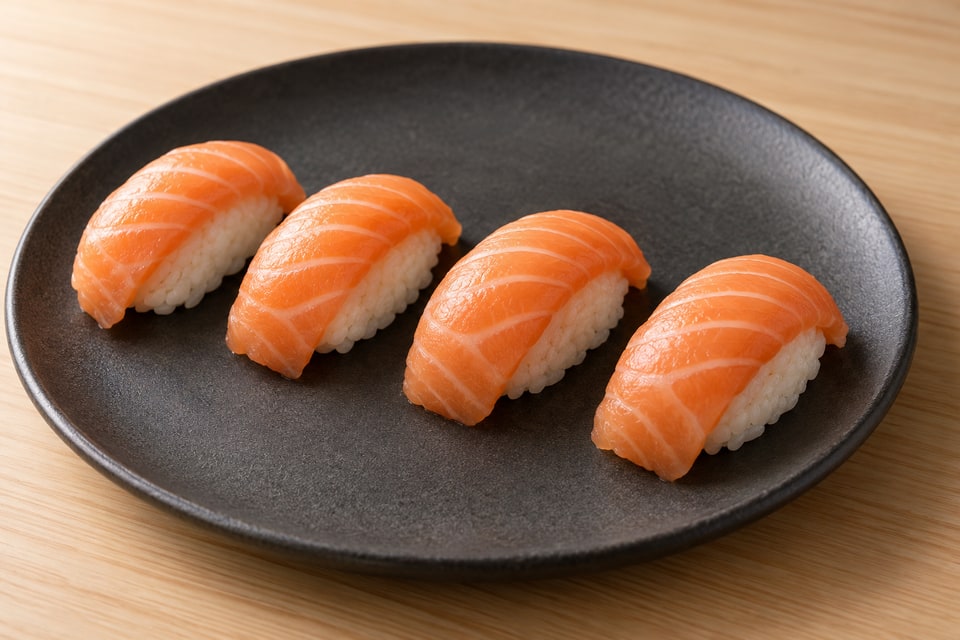
Salmon nigiri asks for a clean, supple slice rather than an elaborate garnish. The pale fat lines should run across the bite, and the broad surface should settle over the rice without being pushed into place.
Open recipe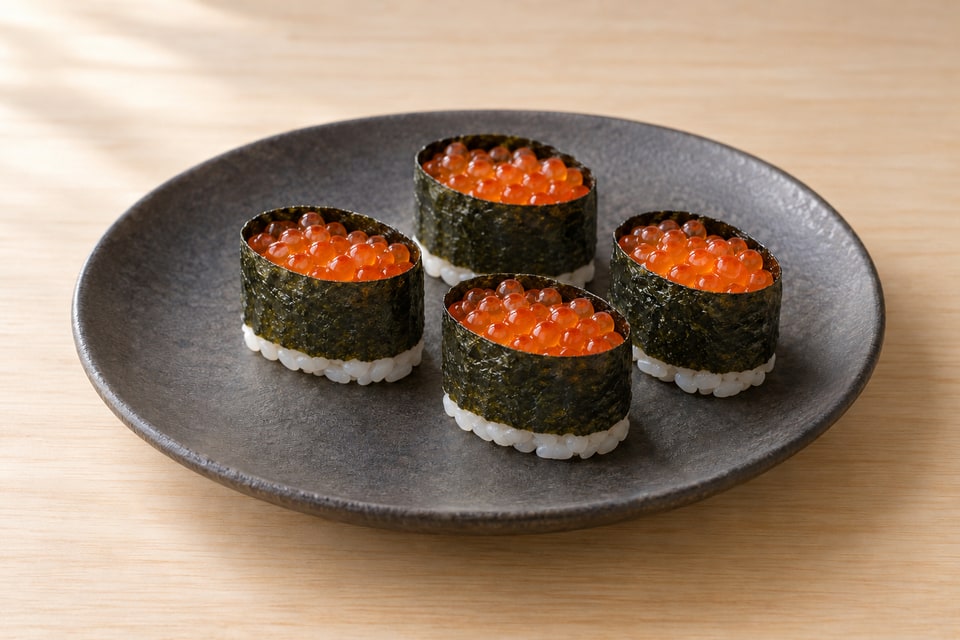
Salmon roe gunkan uses a narrow nori collar to hold a modest spoonful of commercially prepared ready-to-eat ikura. The rice base stays light and the eggs remain intact. Salted roe still needs reliable cold handling.
Open recipe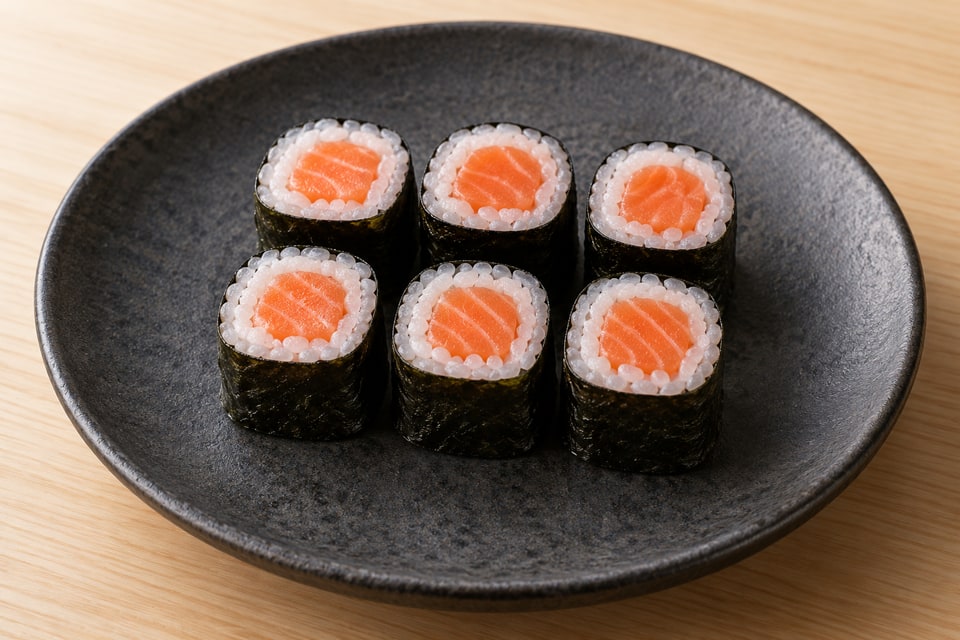
A salmon hosomaki should show one quiet orange line through a small nori-wrapped bite. The rich fish needs neither a thick sauce nor an oversized rice layer.
Open recipe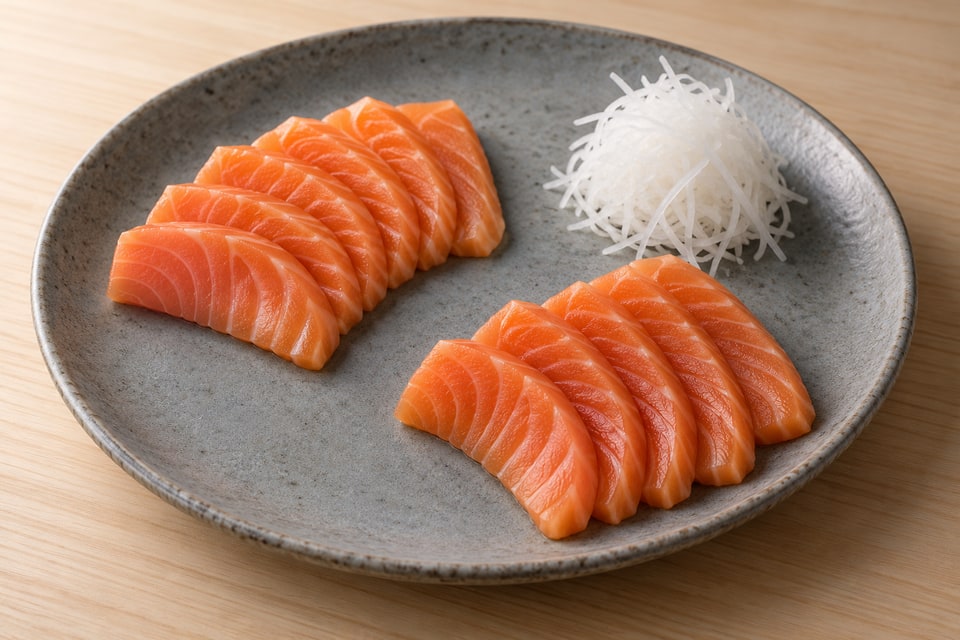
Salmon sashimi is an exercise in cutting and service rather than cooking. The block should be properly sourced for raw consumption, kept cold, and sliced across its muscle grain with a clean pull of the blade.
Open recipe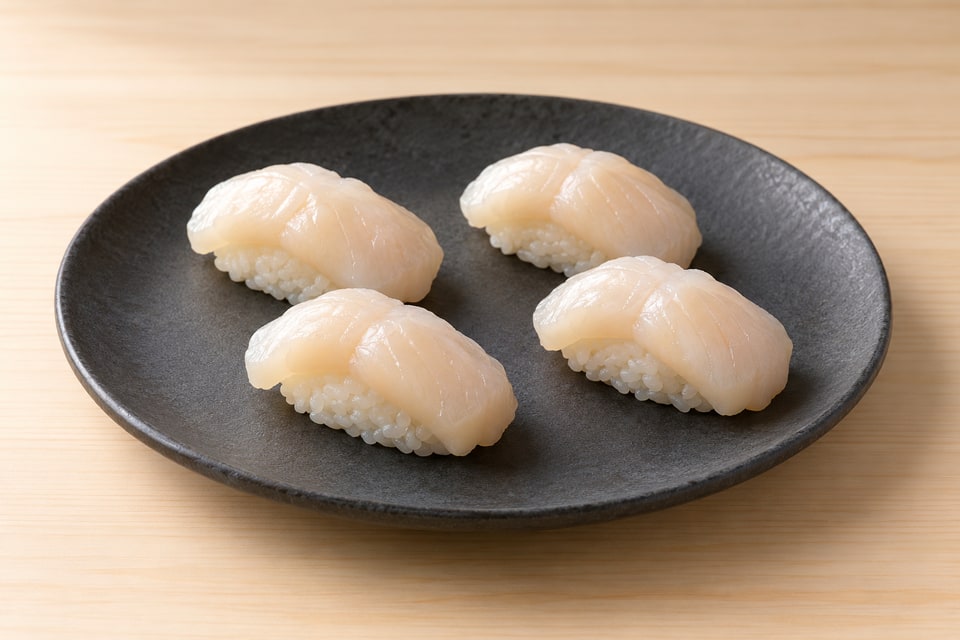
Scallop nigiri depends on the texture of the adductor muscle, the firm round part sold as a sea scallop. Dry-packed scallops are preferable because added water makes both handling and flavor less predictable.
Open recipe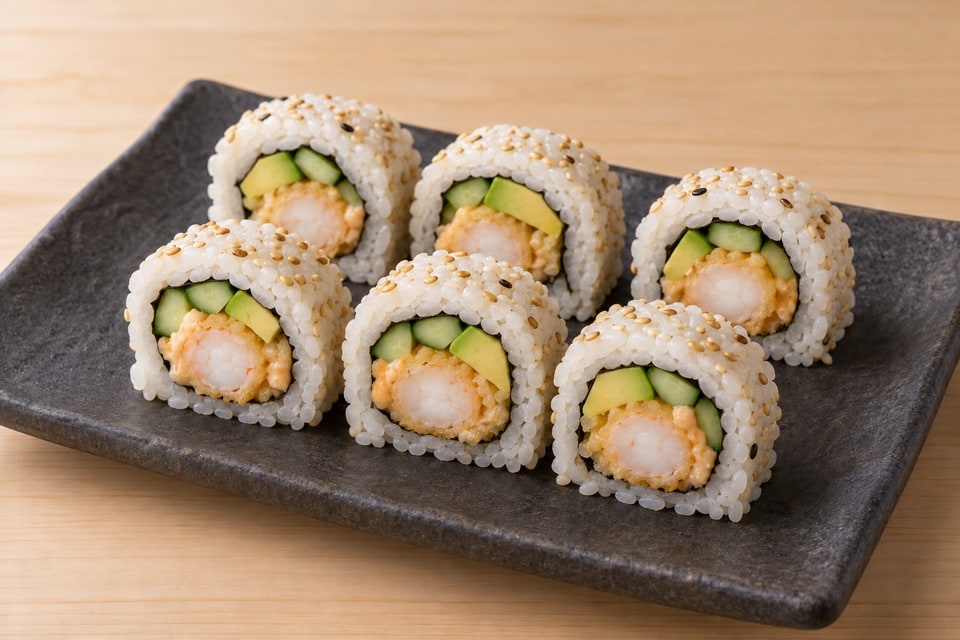
Shrimp tempura roll should keep the fried shrimp’s edge while giving it a soft rice surround. The shrimp is straightened with shallow belly scores, then cooked in a light batter.
Open recipe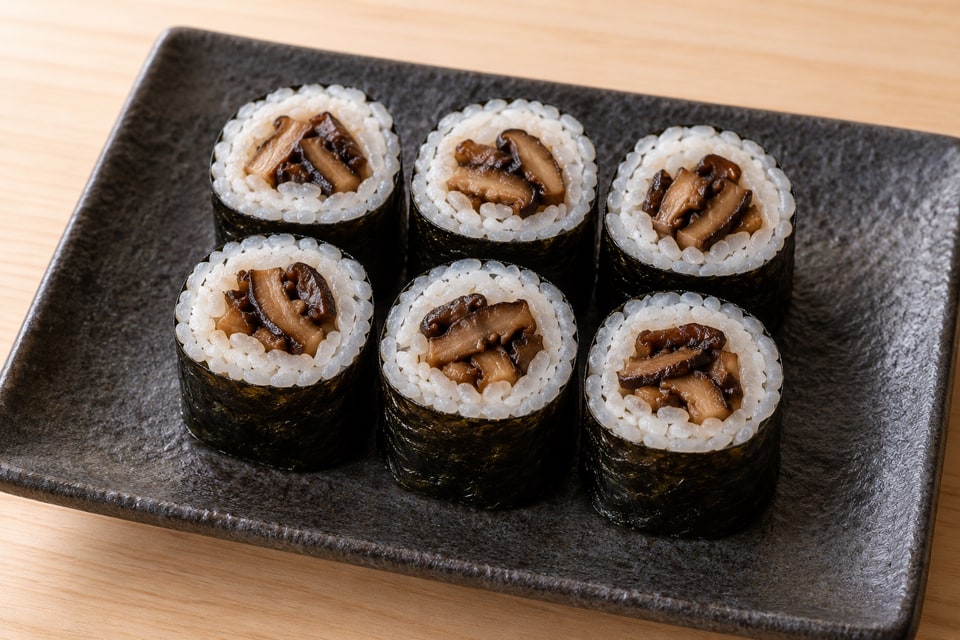
Shiitake maki gives mushrooms time to absorb a lightly sweet soy seasoning, then drains them before they meet the rice. The filling should be tender and savory, not a loose syrup.
Open recipe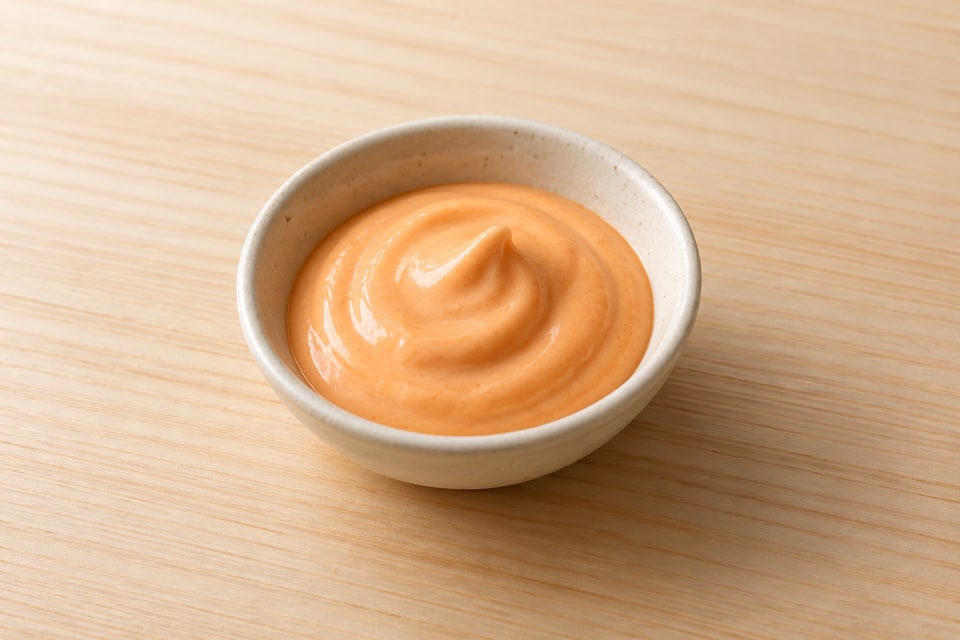
Spicy mayo is a measured coating, not a way to hide an uneven filling. Begin with a commercial mayonnaise made with pasteurized egg and a modest chile quantity.
Open recipe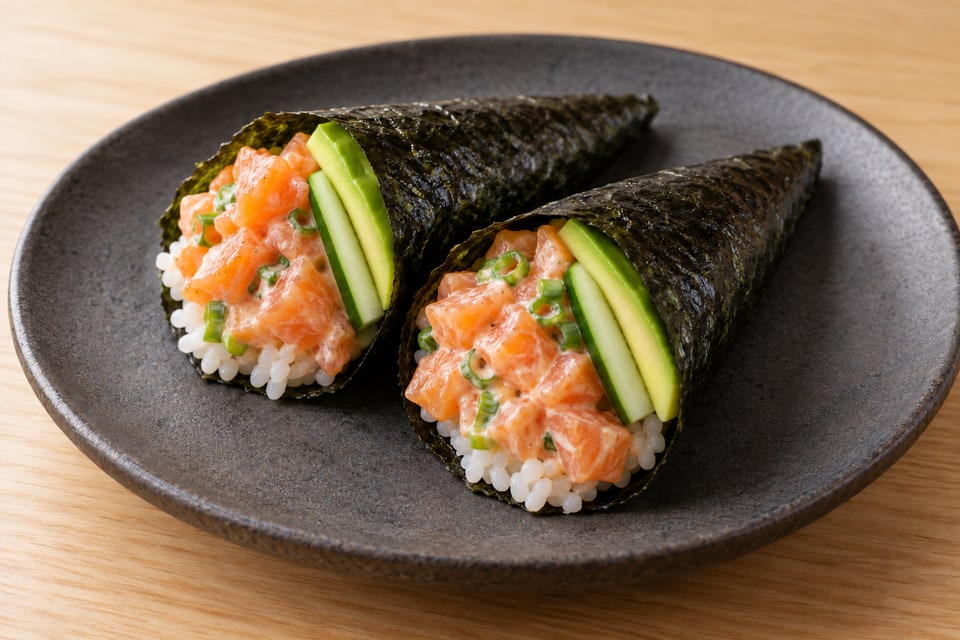
Spicy salmon temaki keeps the fish in a lightly dressed, chilled filling, then encloses it in dry nori at the last moment. The cone is deliberately small.
Open recipe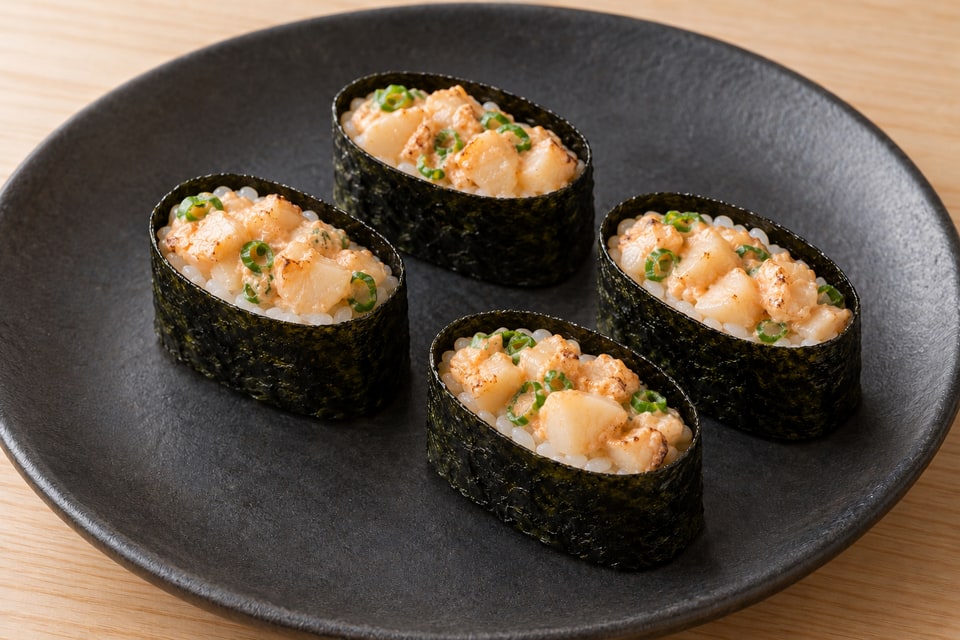
This spicy scallop gunkan uses fully cooked scallops rather than a browned exterior around a raw center. A restrained mayonnaise-and-chile coating binds recognizable pieces.
Open recipe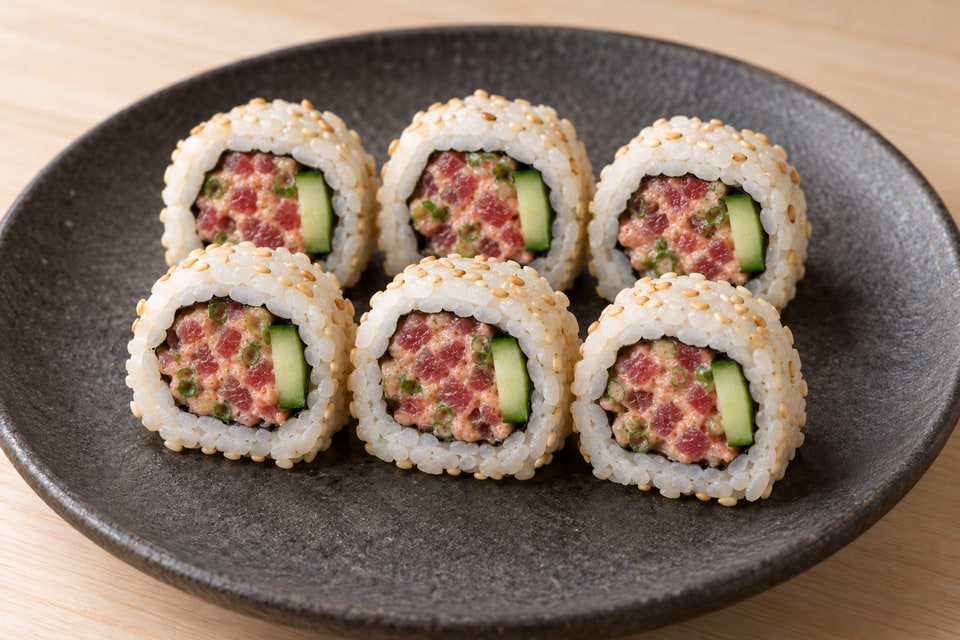
Spicy tuna roll should still taste of tuna. A modest amount of mayonnaise and chile sauce binds the finely chopped fish without turning it into a sauce filling.
Open recipe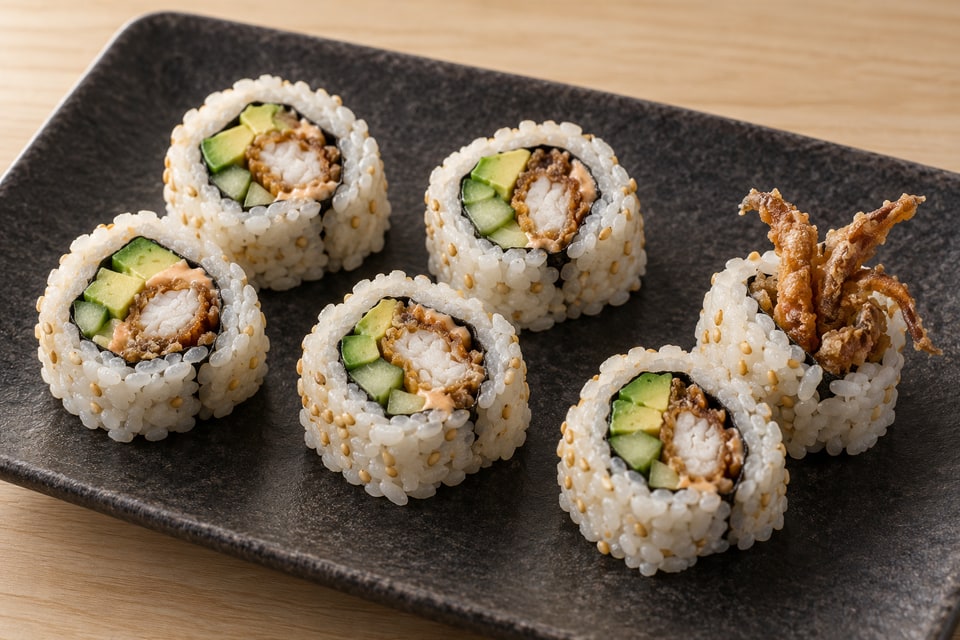
Spider roll takes its shape and crunch from soft-shell crab. The crab must be cleaned before battering, and the cooked center must be confirmed rather than inferred from the crust’s color.
Open recipe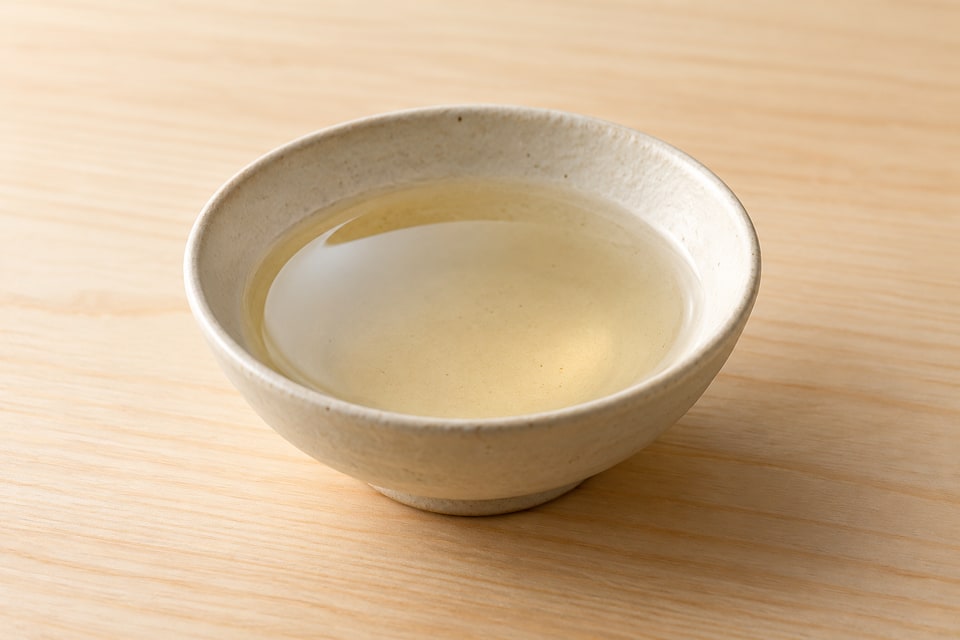
Sushi vinegar seasoning, or sushizu, is measured to support the rice rather than dominate it.
Open recipe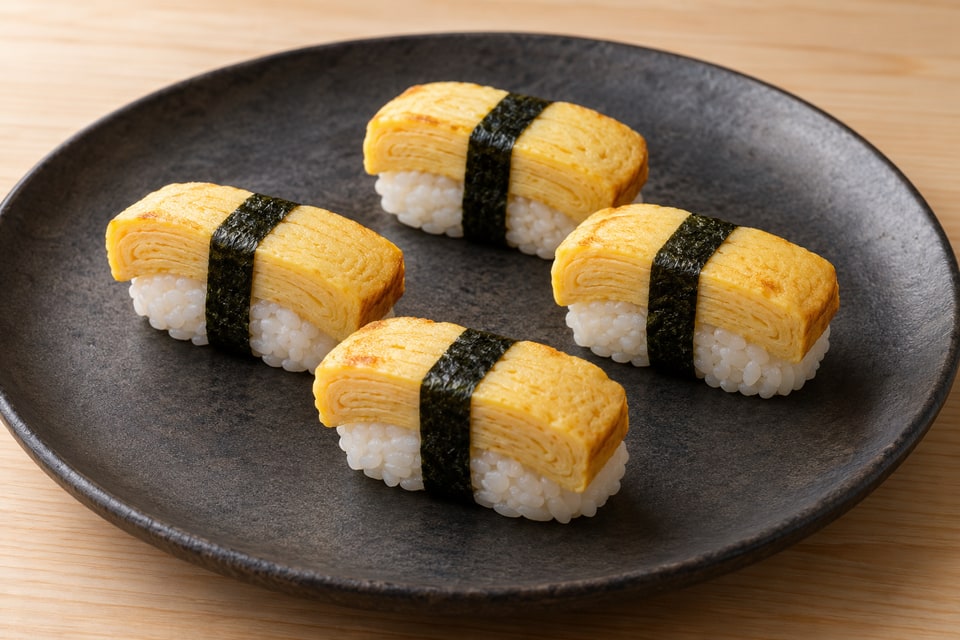
Sweet omelet nigiri brings a soft, lightly sweet layer to the sushi counter. The egg is cooked as tamagoyaki, a rolled omelet built from thin sheets, then cut into neat slabs.
Open recipe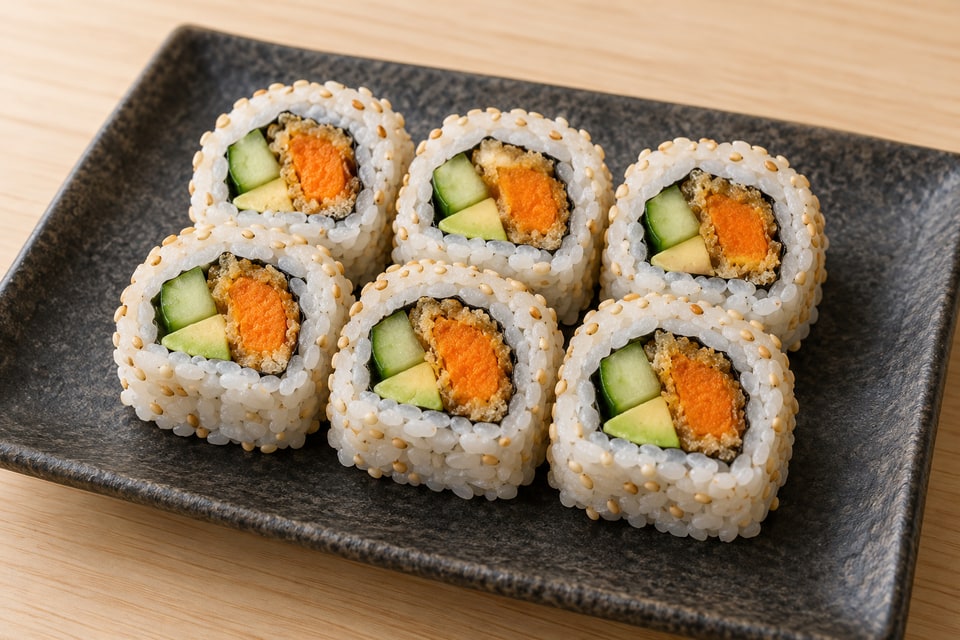
Sweet potato tempura roll uses a cooked, crisp vegetable filling rather than a soft mash. The strips should be thin enough to become tender before the batter browns.
Open recipe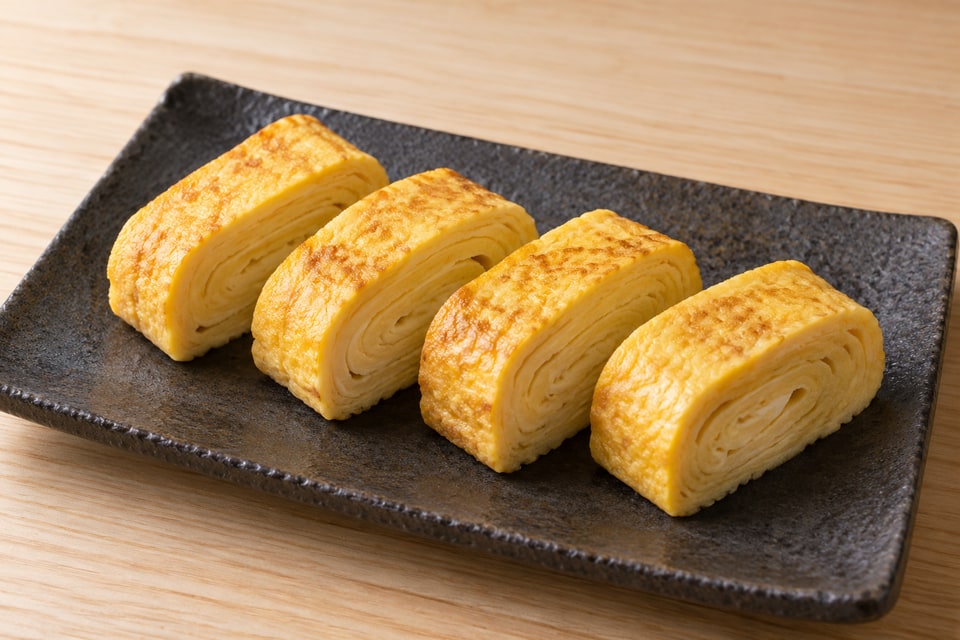
Tamagoyaki is a rolled omelet made from several thin layers. The new sheet flows beneath the previous roll and joins it, creating a soft layered center rather than loose scrambled egg.
Open recipe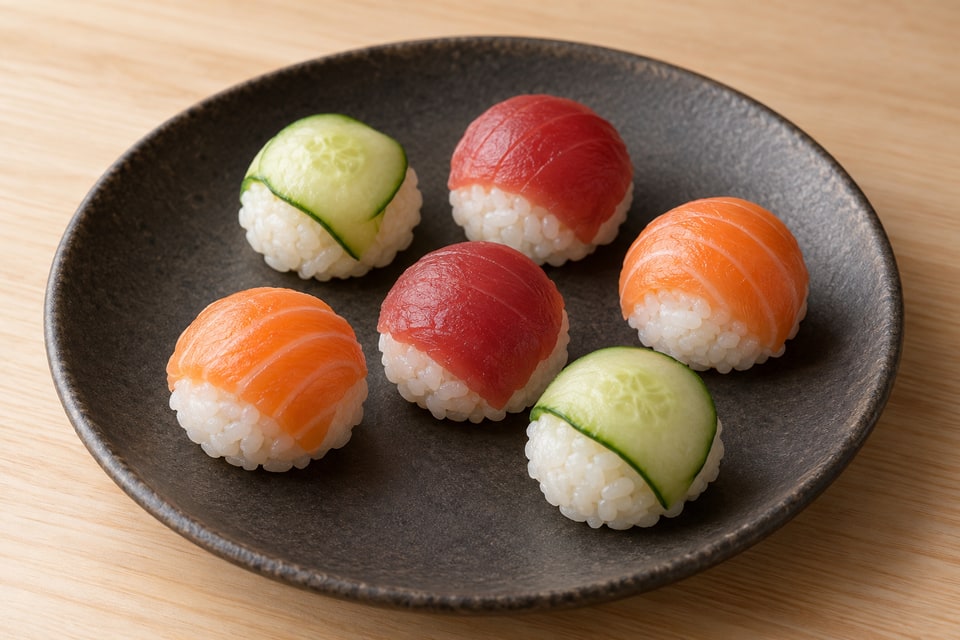
Temari sushi forms small rounded portions with a thin topping wrapped around a light rice center. Food-safe wrap helps the home cook gather the shape without direct repeated handling.
Open recipe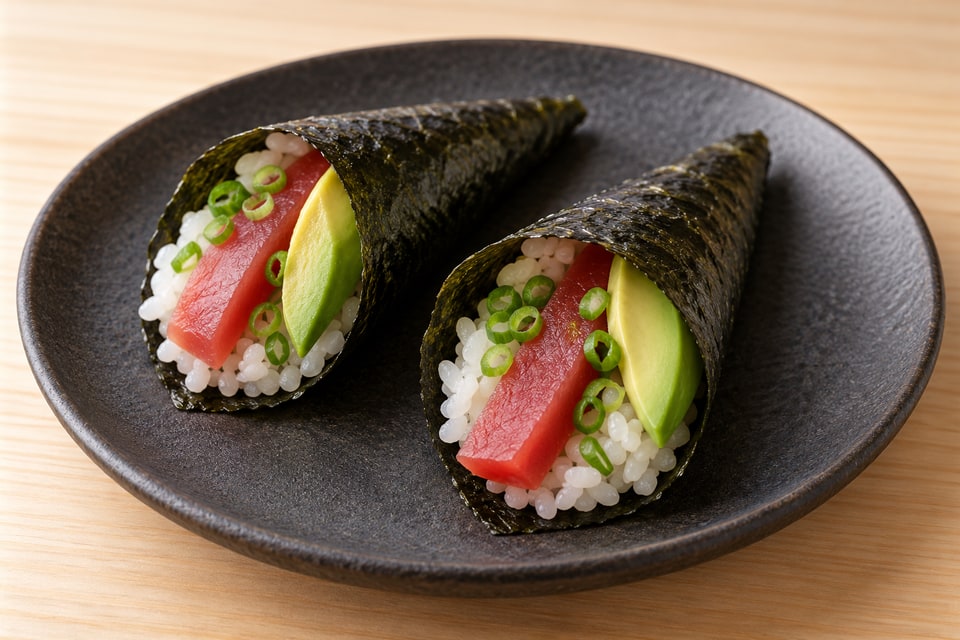
Tuna avocado temaki relies on the contrast between a clean tuna strip and a soft avocado wedge. The filling is plainly seasoned, with soy sauce at the table rather than a wet marinade inside the cone.
Open recipe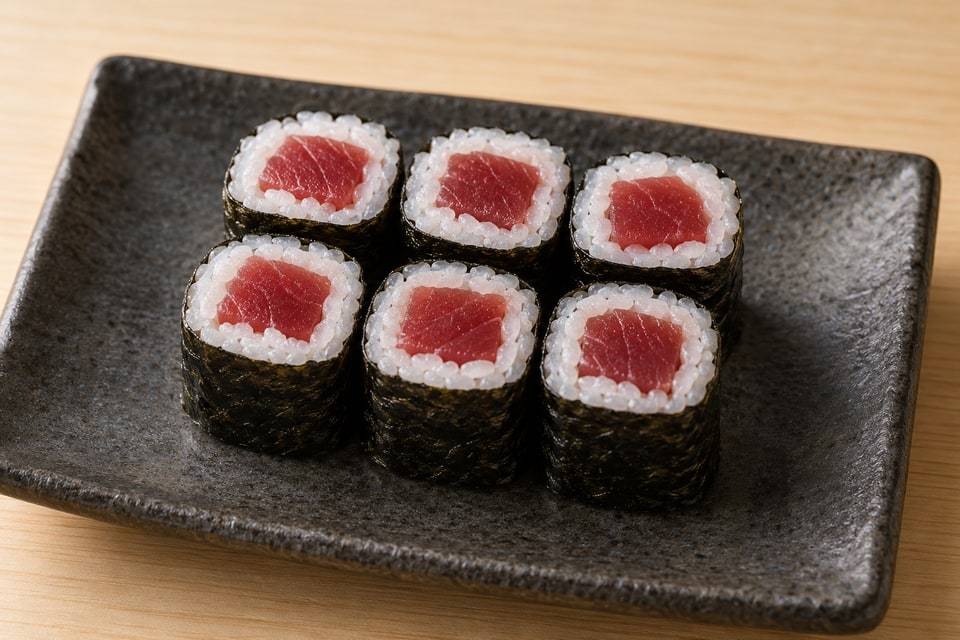
Tekka maki keeps lean tuna at the center of a narrow roll. The fish should be cut into even strips across the grain where the block permits, then enclosed with only a thin veil of rice. Wasabi is restrained.
Open recipe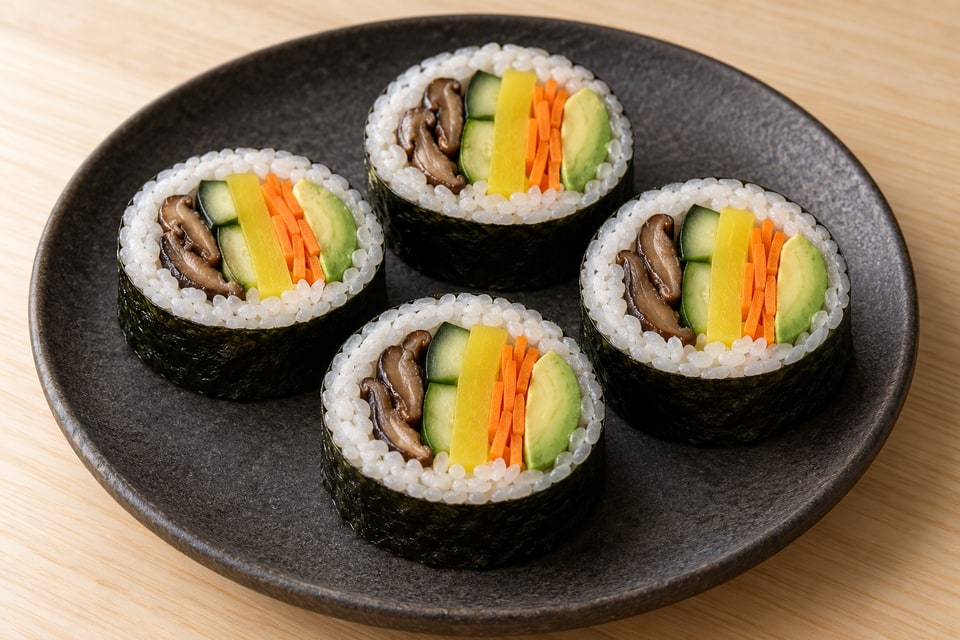
Vegetable futomaki is a full-sheet roll whose filling should read as separate colors and textures. This home version uses cooked shiitake, crisp cucumber, pickled radish, carrot, and avocado.
Open recipe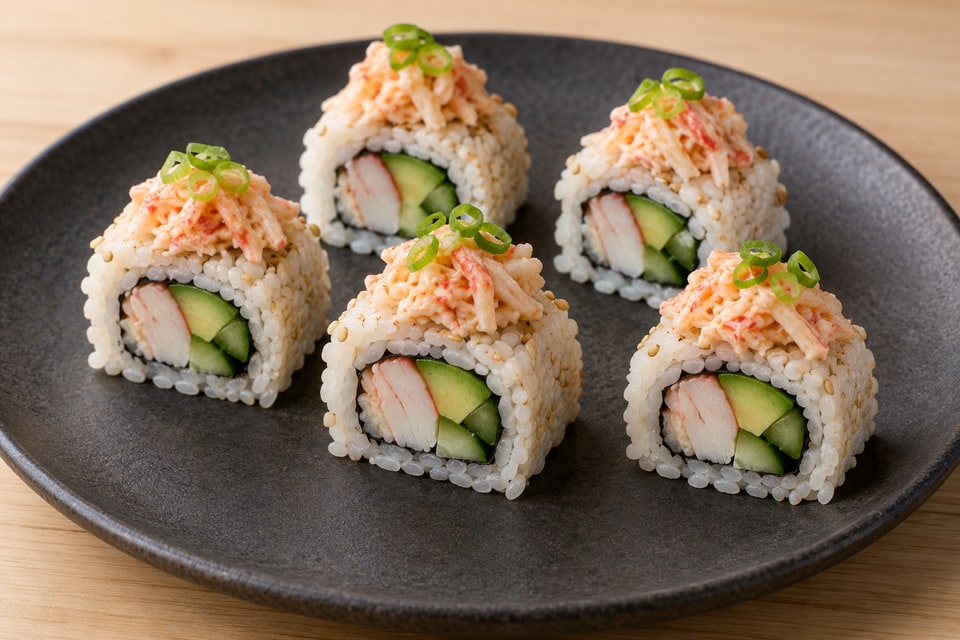
Volcano roll is a modern cooked-crab roll crowned with a warm spicy crab topping.
Open recipe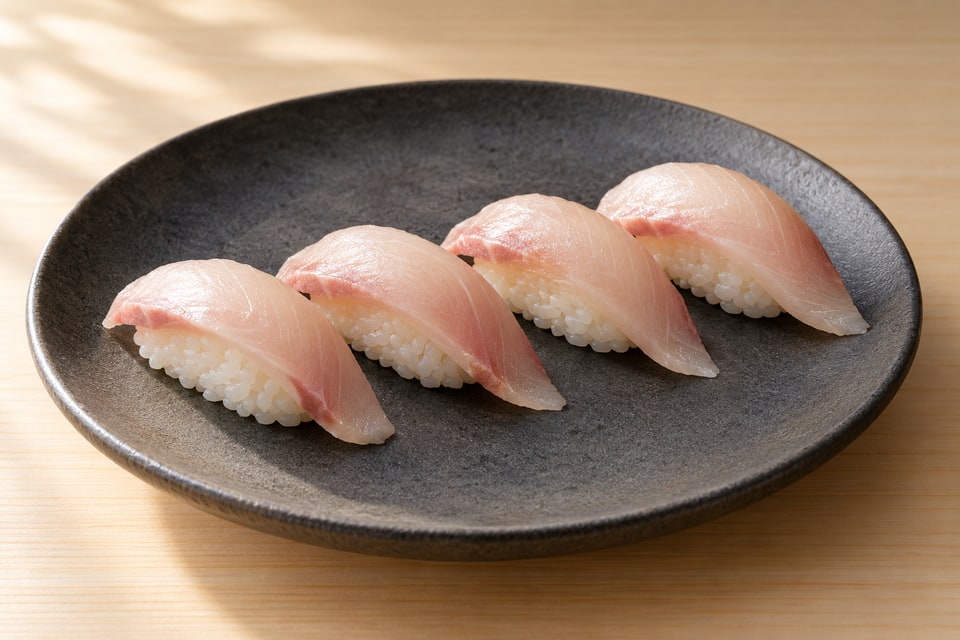
Yellowtail brings a mild, buttery richness without needing a glaze. The clean loin is easier to slice than a thin belly flap, and a narrow removal of the dark bloodline helps the fish’s sweetness remain distinct.
Open recipe