The dish
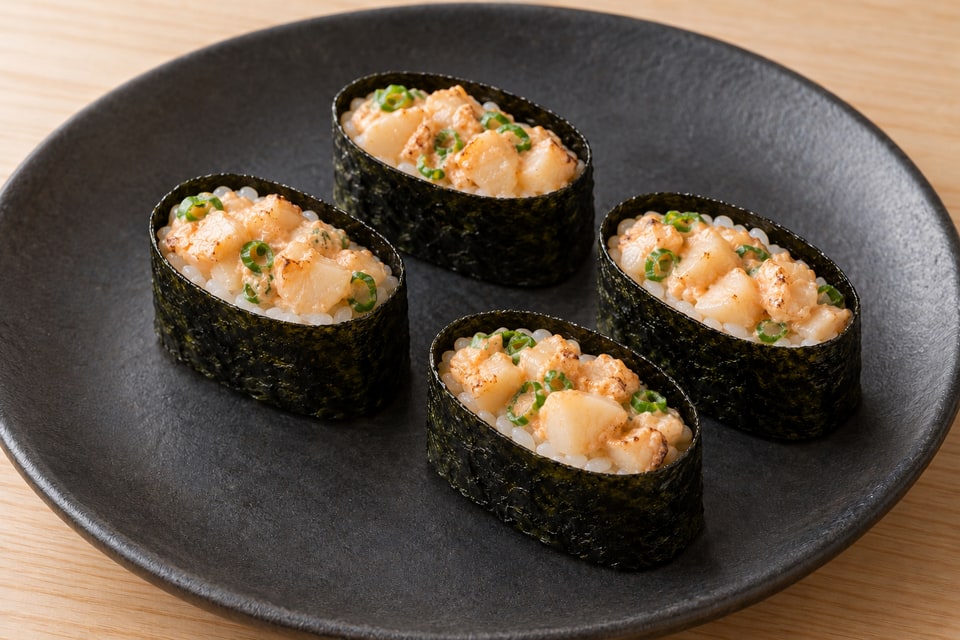
This spicy scallop gunkan uses fully cooked scallops rather than a browned exterior around a raw center. A restrained mayonnaise-and-chile coating binds recognizable pieces. The rice remains soft and the nori collar is filled close to service. This is a modern cooked-seafood variation, with the temperature endpoint checked before cooling and assembly.
Good sushi preparation keeps each component legible. Rice contributes a gently acidic foundation, vegetables retain their own texture, and the topping or filling is handled with restraint. This home version uses measured portions and ordinary kitchen equipment, with specialist equipment alternatives stated below. Follow the sensory checks at each stage rather than treating a timer as the result. Prepare the accompaniments and the table before the final assembly. The final shape is a way of carrying the ingredients together; it should not compress soft rice or hide a wet filling. Make a small, careful batch and serve it promptly.
At a glance
| Item | Plan |
|---|---|
| Active time | About 25–35 minutes after rice preparation |
| Main technique | Fully cooked scallops and a shallow nori boat |
| Hands-off time | Rice hydration and covered rest; no additional long rest |
| Make-ahead | Prepare components as noted; assemble to order |
A closer look at the ingredients
Quantities live in the recipe card.
The structure and topping
each component supplies a separate texture.
Accompaniments
kept separate so every portion can be tasted before extra seasoning.
Before you begin
The craft, step by step
The complete method.
Read through once before you begin. The working recipe follows below.
Doneness & Quality Checkpoints
- Pieces remain visible under a light dressing.
- Scallop topping is contained and the rice stays soft.
- Nori retains an edge and scallop flavor remains distinct.
- Rice should remain glossy and distinct, with a gentle give at the bite. Avoid forcing the grains into a hard mold.
- Judge the seasoning from the first finished portion. Extra soy sauce is a table choice; it should not replace the rice’s measured seasoning.
- Keep chilled ingredients cold until their brief assembly period. A pleasantly warm rice texture is a service goal, not a safe method for holding seafood.
Finish & Plate
Keep the topping and rice structure visible on a plain plate. Arrange small portions in a shallow group rather than a high stack. Use a clean plate and place the accompaniments alongside in separate small dishes. Leave enough room for each portion to be lifted without disturbing the next. A simple presentation makes it easy to see the filling, topping, and rice structure. Set the finished food on the table while the unused ingredients remain covered and cold. For a larger meal, prepare another small batch rather than forming an oversized tray far in advance.
The working recipe
Spicy Scallop Gunkan
Prep: 25–35 minutes, plus rice preparation · Cook: 4–6 minutes, depending on scallop thickness · Total: About 2 hours including fresh rice · 2 (10 pieces)
Ingredients
The structure and topping
Accompaniments
Instructions
- Set out the accompaniments and prepared rice over 3–5 minutes so the final assembly is uninterrupted. Weigh the rice quantity specified rather than estimating from the dry-rice measure in the anchor. Keep chilled toppings covered until their preparation step. Checkpoint — Rice grains are gently warm and distinct, and the cold toppings remain refrigerated.
- Warm the oiled pan over medium-high heat for 1–2 minutes. Cook scallops roughly 2–3 minutes per side, allowing for thickness, until pearly and opaque through the center, confirmed at 63 °C (145 °F). Safety — Surface browning alone does not establish completion. Checkpoint — Center is opaque and temperature-confirmed.
- Cool on a clean shallow plate for 10–15 minutes, then chop into distinct small pieces over 1–2 minutes. Mix mayonnaise and sriracha briefly and fold through with scallion; refrigerate if delayed. Checkpoint — Pieces remain visible under a light dressing.
- Mix tezu and divide rice into ten 20 g (about 1 tablespoon) portions over 2–3 minutes. Shape light ovals, stopping when each holds. Checkpoint — The base remains soft and visibly grained.
- Wrap each oval with dry nori over 15–25 seconds and seal the overlap with one rice grain. Repeat over 3–4 minutes. Checkpoint — Collars stand with dry upper edges.
- Spoon a tenth of the topping into each collar over 2–3 minutes, without packing it down or pushing above the rim. Checkpoint — Scallop topping is contained and the rice stays soft.
- Plate and serve within 1–2 minutes, offering extra seasoning separately. Taste first because the dressing already carries salt and heat. Checkpoint — Nori retains an edge and scallop flavor remains distinct.
Troubleshooting
| Symptom | Cause | Fix |
|---|---|---|
| Loose structure | Excess liquid or uneven shaping | Drain components and use one light contact |
| Hard rice center | Repeated pressure | Stop when the portion just holds |
| Rice sticks to tools or fingers | Dry contact surface | Use a thin tezu film and shake off dripping water |
| Dense rice bite | Repeated squeezing or pressing | Use one light shaping contact and stop when it holds |
| Watery presentation | Undrained filling or garnish | Drain and blot components before final assembly |
Storage, Make-Ahead & Variations
Serve freshly assembled sushi immediately. The nori loses its crisp edge and the rice firms as it stands; these are quality changes, not reliable signs of microbiological safety. Keep unused seafood covered in the refrigerator at 4 °C (40 °F) or colder, and follow its supplier’s shorter opening or thawing limit. For this home service, buy raw seafood for the same day and do not save an assembled raw-fish portion for tomorrow. Start a two-hour room-temperature clock when cooked rice leaves the heat, including cooling, assembly, and service. Shorten the limit to one hour in surroundings above 32 °C (90 °F). Refrigerate safe surplus promptly in shallow containers rather than preserving the warm texture on the counter. Discard food beyond that limit; reheating cannot reliably rescue temperature-abused rice. The rice anchor explains texture handling; this conservative holding limit governs safety. Measure sauces and wash vegetables ahead, refrigerating cut produce separately. Cook rice and cut seafood near service. Double by preparing two small batches, keeping unused seafood cold. Cooked scallops may be refrigerated promptly for up to two days; dress close to service. This fully cooked version removes an ambiguous lightly seared endpoint. Follow the stated home version and label changes to cooked or commercial products. See Fish Safety & Sourcing for sourcing distinctions. The live starting material was harvested from https://sashimee.net/recipes/spicy-scallop-gunkan.