The dish
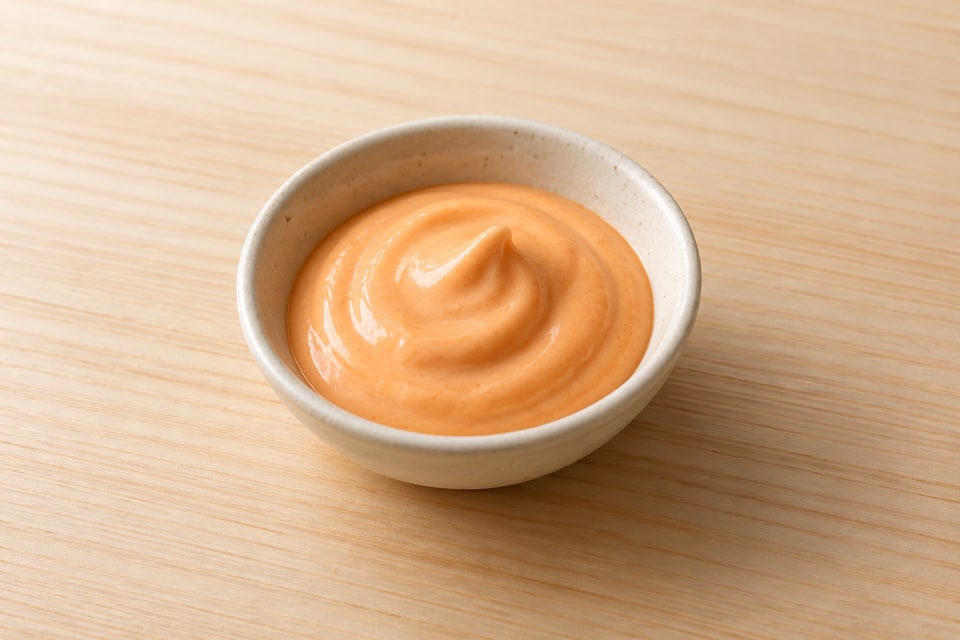
Spicy mayo is a measured coating, not a way to hide an uneven filling. Begin with a commercial mayonnaise made with pasteurized egg and a modest chile quantity. A little acidity lifts the richness, while sesame oil remains optional. Taste the sauce with rice or the intended cooked ingredient; tasting it alone can encourage more salt and heat than the finished sushi needs.
This version is a modern condiment used sparingly in several rolls. Mayonnaise brands differ in acidity and seasoning, so the finishing salt is optional. Japanese mayonnaise is a valid preference rather than a guarantee that every product has the same formula. Read the label for egg, mustard, soy, and other allergens, and keep the finished sauce refrigerated.
A closer look at the ingredients
Quantities live in the recipe card.
The coating
a stable creamy base carries measured heat.
Before you begin
Use a clean small bowl and spoon, and have a clean covered storage container ready. Avoid mixing sauce with a utensil that has touched raw fish; portion sauce into a separate small bowl for each raw-fish filling.
The craft, step by step
The complete method.
Read through once before you begin. The working recipe follows below.
The working recipe
Spicy Mayo
Prep: 5–8 minutes · Cook: None · Total: 5–8 minutes · Makes about 150 g (⅔ cup)
Ingredients
The coating
Instructions
- Stir the mayonnaise and initial 15 g (1 tablespoon) sriracha for 30–45 seconds so the heat is evenly distributed. Checkpoint — The coating is uniform, with no red streaks.
- Add lime juice and optional sesame oil, then stir another 15–20 seconds. Taste on a spoonful of cooked rice rather than adjusting solely from a neat sauce sample. Checkpoint — Richness remains primary, with a clean acidic lift.
- Adjust heat in 5 g (1 teaspoon) sriracha increments over 1–2 minutes, within the listed extra amount. Taste before adding the optional salt. If too hot, stir in 30 g (2 tablespoons) additional clean mayonnaise and identify the increased yield. Checkpoint — Heat is clear but does not conceal the ingredient being dressed.
- Transfer to the clean covered container in 30–60 seconds and refrigerate immediately. Safety — Do not treat mixed mayonnaise as an unrestricted room-temperature condiment, especially after contact with seafood. Checkpoint — The sauce remains cool and cleanly handled.
Troubleshooting
| Symptom | Cause | Fix |
|---|---|---|
| Too hot | Chile added without tasting | Add measured mayonnaise and increase the stated yield |
| Too thin | Too much juice or sauce | Use the listed liquid amounts and a stable mayonnaise |
| Too salty | Base and chile sauce already seasoned | Omit finishing salt |
Storage, Make-Ahead & Variations
Refrigerate at 4 °C (40 °F) or colder for up to three days, or the ingredient label’s shorter limit. Use clean utensils. Discard sauce left out beyond two hours, or one hour above 32 °C (90 °F), and discard any leftover portion that has contacted raw seafood. A labeled vegan mayonnaise works with the same measured chile addition. Other chile pastes change sweetness and salt; identify the actual product rather than presenting all pastes as interchangeable.