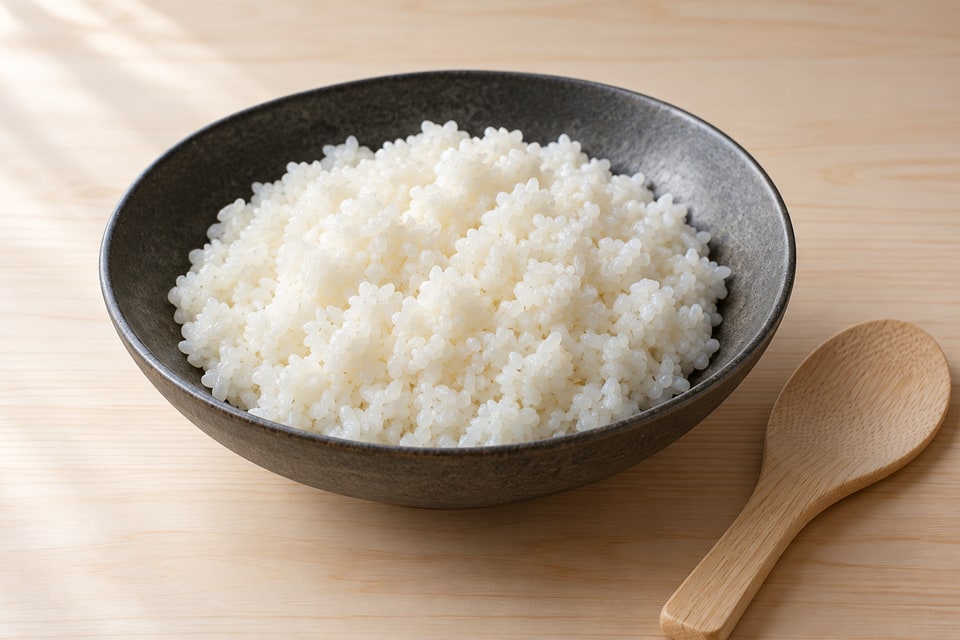
Selecting and Preparing Your Rice
Sushi begins with rice, yet many home cooks give rice the least attention. The grain must be a short-grain or medium-grain Japanese variety such as Koshihikari, Hitomebore, or Akita Komachi. These varieties have a starchy composition that creates the characteristic sticky yet distinct-grain texture of sushi rice. Long-grain varieties like jasmine or basmati produce a fluffy, separate-grain result that is inappropriate for sushi. Your rice should be less than one year old; older rice has lost moisture and produces drier results. Purchase rice from markets with high turnover to ensure freshness. Begin by rinsing your rice thoroughly: place it in a fine-mesh strainer and rinse under running water while stirring gently with your fingers. Water should initially appear cloudy with starch; continue rinsing for five to six cycles until the water runs relatively clear. This process removes excess surface starch and dust but retains enough starch for proper stickiness. Under-rinsing leaves excess surface starch and produces gluey, mushy rice; over-rinsing (or rough handling that breaks grains) strips too much starch and dulls flavor.
Soaking, Water Ratios, and Cooking
Use the measured method in the current Perfect Sushi Rice recipe: 500 g short-grain white rice and 550 ml cooking water. Wash the rice four to five times, drain, and rest for thirty minutes. Bring the measured rice and water to a boil, reduce to the lowest flame for twelve minutes, then rest off the heat for ten minutes with the lid closed. Follow the complete recipe for the optional kombu and the quality checkpoints. Do not confuse a mass-to-volume measurement with a cup-to-cup ratio.
Cooling and Seasoning with Sushi-Zu
The current rice recipe uses 70 ml rice vinegar, 30 g sugar, and 10 g fine salt for 500 g dry rice. Warm the seasoning gently until dissolved without boiling. Turn the cooked rice into a wide bowl, drizzle the seasoning over the paddle, and distribute it with a cutting fold rather than stirring. These are the journal recipe’s proportions, not a universal formula for every style of shari.
Fanning Technique and Moisture Control
As you mix in the sushi-zu, begin fanning the rice with a paper fan or cloth fan. This fanning serves two purposes: it evaporates excess moisture and cools the rice to body temperature. As the rice cools and moisture evaporates, the grains develop a subtle sheen and the desired texture—sticky enough to hold together but with individual grains remaining distinct. Continue fanning and folding gently for about five to ten minutes until the rice has cooled significantly. The combination of vinegar, salt, sugar, gentle motion, and fanning creates the foundation that distinguishes sushi from plain seasoned rice. This stage cannot be rushed or skipped; it is the chemical and physical transformation that defines sushi rice. A paper fan works perfectly well and costs just a few dollars; an electric fan also works but offer less control. Some sushi chefs use a damp cloth for fanning, which adds a bit of humidity back to prevent the rice from becoming too dry.
Hangiri: Purpose and Alternatives
A traditional hangiri is a shallow wooden rice tub specifically designed for this cooling and mixing stage. The wood absorbs excess moisture, the wide surface area facilitates even cooling, and the curved shape allows for efficient folding and fanning. If you have access to a hangiri, use it—it makes the process noticeably smoother. However, hangiri are not essential. A wide ceramic or wooden salad bowl serves the same purpose acceptably. Avoid metal bowls, which absorb no moisture and can react with the vinegar. Even a large plate or platter can work if you're willing to transfer to a bowl once cooled. The principle is the same: maximize surface area and choose material that allows slight moisture absorption. Some professional cooks use a plastic tub or even a rice cooker's inner pot set aside to cool. The traditional hangiri imparts slight flavor benefits from the wood and improves moisture management, but technique and attention matter more than equipment.
Temperature Management and Timing
Prepare the table and other ingredients before the final assembly. The current recipe asks for gently warm, supple rice after folding and fanning. Keep seafood chilled until its preparation step and do not place it onto hot rice. The rice recipe’s holding notes describe quality and a short preparation window; they do not establish a validated acidification or extended warm-holding process. Follow local food-safety guidance rather than treating a vinegar measurement as a safety test.
Troubleshooting Common Rice Problems
If your rice is too mushy or gluey, you likely under-rinsed, added too much water, or cooked too long. Reduce water slightly next time and ensure you've counted your rinses carefully. If rice is too dry or the grains are separate, you may have over-rinsed, skipped the soak, or used too little water. If rice tastes overly vinegary, you added too much sushi-zu or the zu was too strong; reduce the vinegar ratio next time or season more gradually. If rice feels gluey and unpleasant rather than sticky, you didn't rinse enough or used the wrong rice variety. Consistently great rice requires repetition and minor adjustments based on your specific rice, water, and equipment. Keep notes: record water ratio, cooking time, and soaking time for each batch you make, and note the results. Over five or six batches, you'll develop the intuition to adjust without overthinking. Perfect rice is not complicated, but it does demand attention and respect. This foundation determines whether your rolls, nigiri, and bowls taste exceptional or merely acceptable.
Keep these details in mind.
- Use only short or medium-grain Japanese rice varieties like Koshihikari; rinse 5-6 times until water runs relatively clear
- Soak rice 30 minutes in a 1:1.1 water ratio, cook 15 minutes covered plus 10 minutes resting; timing is critical
- Apply warm sushi-zu to hot rice using a gentle folding motion while fanning to cool and evaporate moisture
- Serve rice at body temperature within 30-60 minutes of preparation; cold rice becomes gluey and unsatisfying
- Master rice before mastering rolls or nigiri—perfect rice makes every technique easier and every result taste better