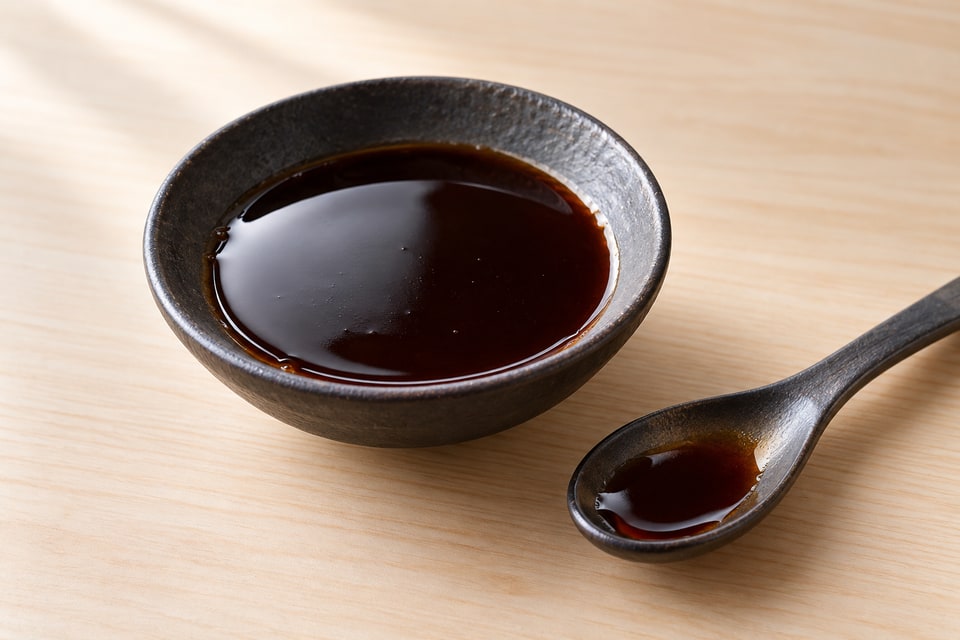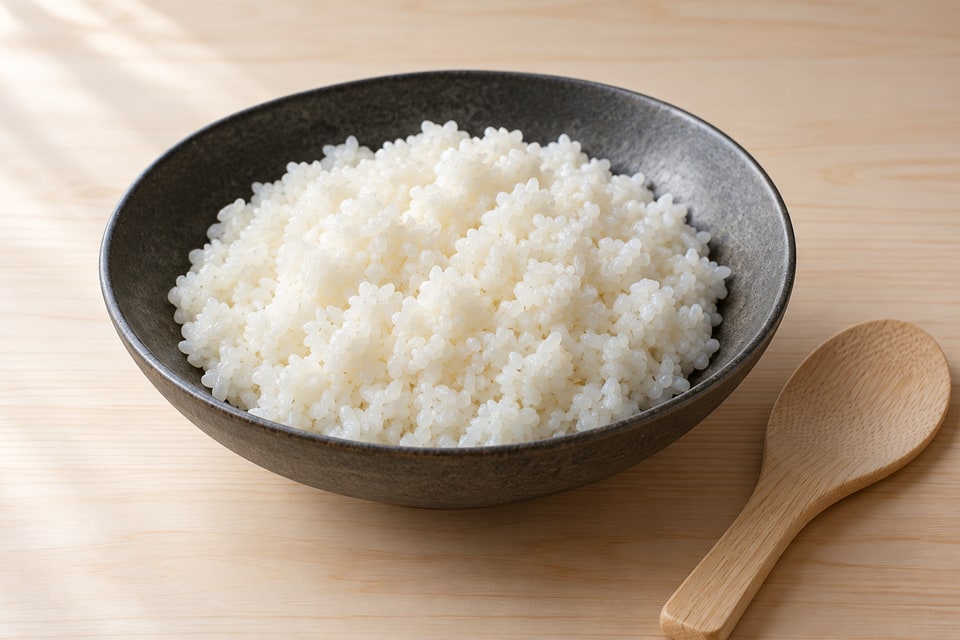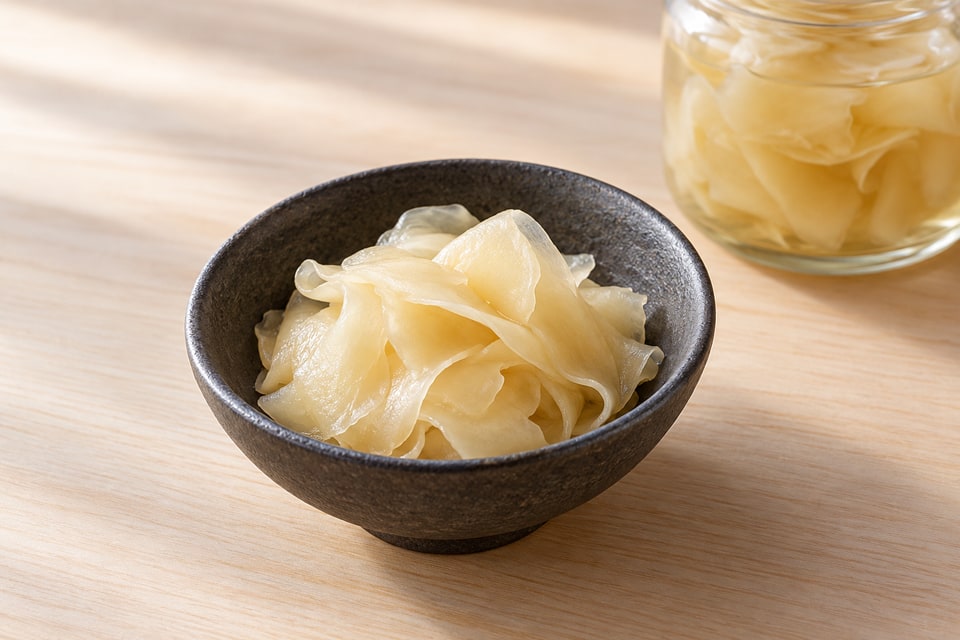
The dish
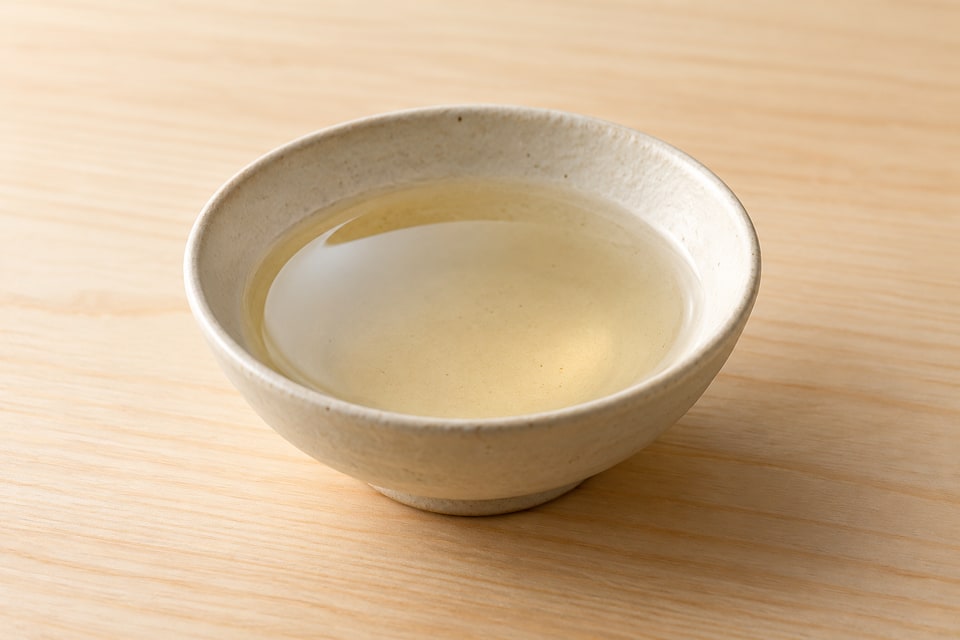
Sushi vinegar seasoning, or sushizu, is measured to support the rice rather than dominate it. The site’s already-final Perfect Sushi Rice uses a specific balance of vinegar, sugar, and salt; this standalone formula follows that anchor exactly. The live seasoning page used a different ratio, so it is not silently substituted. Warm the liquid only enough to dissolve its solids, then fold it through newly cooked rice as the anchor directs.
The liquid should taste strong on its own because it will season a much larger mass of rice. It is neither a drink nor a sauce to pour over finished sushi. Scaling by the dry-rice weight keeps the balance consistent; weighing cooked rice afterward measures a different quantity. No untested vinegar ratio establishes shelf-stability for the finished rice.
A closer look at the ingredients
Quantities live in the recipe card.
The seasoning
measured sweetness and salt support unseasoned rice vinegar.
Before you begin
The craft, step by step
The complete method.
Read through once before you begin. The working recipe follows below.
The working recipe
Sushi Vinegar Seasoning
Prep: 3–5 minutes · Cook: 1–2 minutes · Total: About 10 minutes, including brief cooling · Seasoning for 500 g (1.1 pounds) dry sushi rice
Ingredients
The seasoning
Instructions
- Measure the 30 g (about 2 tablespoons plus 1 teaspoon) sugar and 10 g (about ⅓ ounce) salt with the vinegar over 2–3 minutes, so the standalone formula stays aligned with the anchor. Checkpoint — The vinegar is unseasoned and all three amounts are measured.
- Warm over very low heat for 1–2 minutes, stirring gently until clear, with no gritty solids. Do not boil or touch the hot pan to test it. Checkpoint — No sugar crystals remain at the bottom, and the liquid is warm rather than vigorously bubbling.
- Take off the heat and let stand 3–5 minutes while the rice is readied. Apply in a cutting fold to the full anchor batch, distributing gradually rather than pouring into one spot. Checkpoint — Rice becomes glossy and distinct, with no vinegar pool.
- For a smaller rice batch, scale every ingredient together before mixing. Per 100 g (3½ ounces) dry rice, use 14 ml (about 1 tablespoon) vinegar, 6 g (1½ teaspoons) sugar, and 2 g (about ⅓ teaspoon) fine salt. Checkpoint — The ratio remains unchanged rather than adjusting vinegar alone.
Troubleshooting
| Symptom | Cause | Fix |
|---|---|---|
| Grit remains | Solids not fully dissolved | Warm gently and stir another 20–30 seconds |
| Rice tastes unevenly sour | Seasoning pooled in one area | Distribute across the wide bowl and use a cutting fold |
| Too sweet or salty | Seasoned vinegar used as the base | Start with unseasoned rice vinegar |
Storage, Make-Ahead & Variations
Cool extra liquid promptly, cover, and refrigerate for up to two weeks at 4 °C (40 °F) or colder. Use a clean spoon and discard if contaminated. This conservative home limit replaces the source’s unsupported multi-month room-temperature claim. Rice vinegar brands vary; use a mild unseasoned one rather than guessing that cider or strong distilled vinegar will taste identical.