The dish
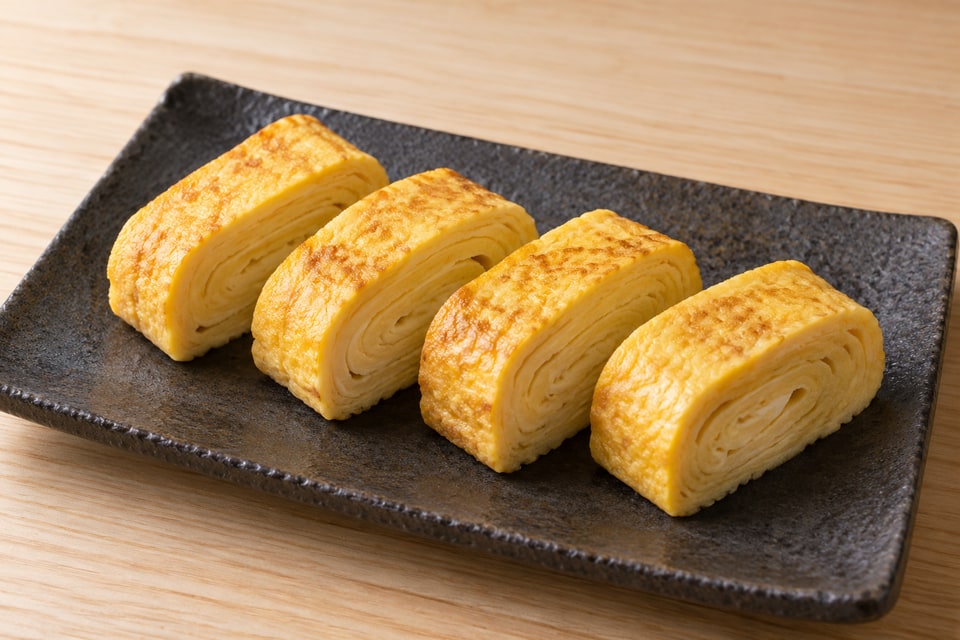
Tamagoyaki is a rolled omelet made from several thin layers. The new sheet flows beneath the previous roll and joins it, creating a soft layered center rather than loose scrambled egg. A small rectangular pan is helpful, but a small nonstick skillet and broad spatula work in a home kitchen. The shape may be rounded at first; fully set, tender layers matter more than sharp corners.
This is a lightly sweet version for the sushi counter. The modest dashi addition softens the texture without turning the mixture into a fragile, broth-heavy omelet. Keep the heat low enough that each thin layer sets before its sugar darkens. Straining the mixture removes stubborn white strands and gives a more even sheet. Do not leave raw eggs warming on the counter for an extended period.
A closer look at the ingredients
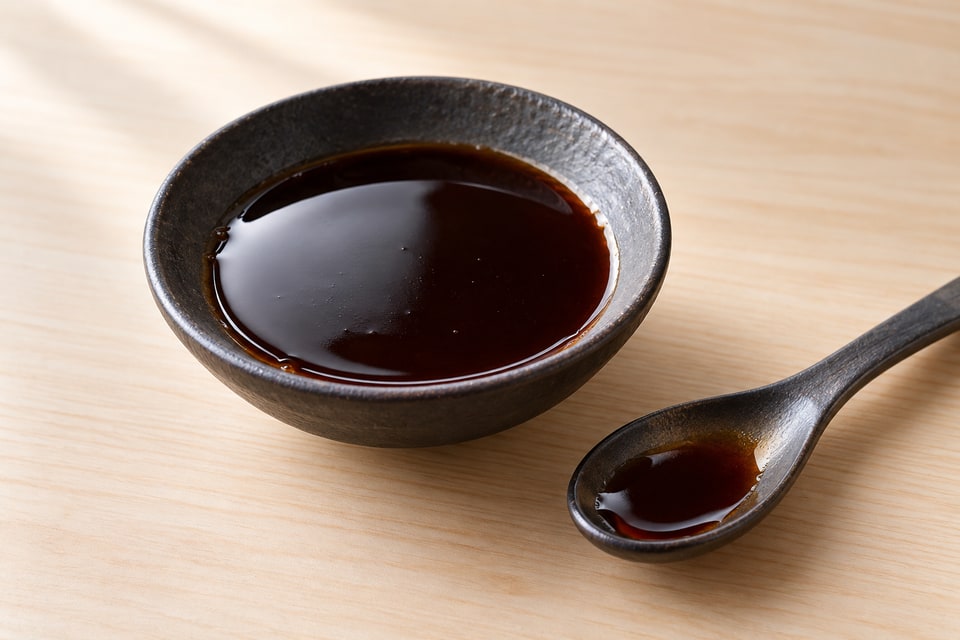
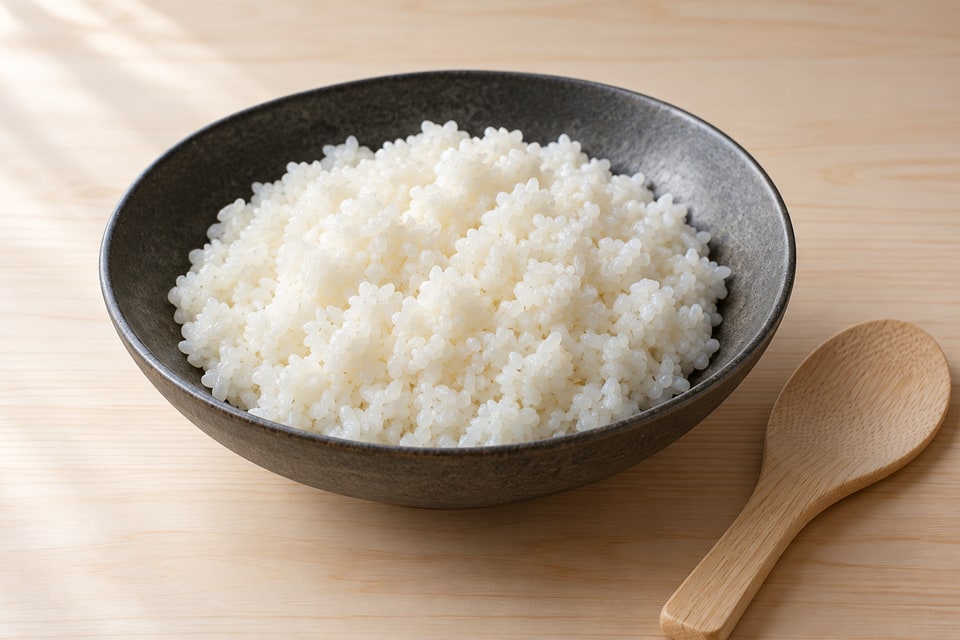
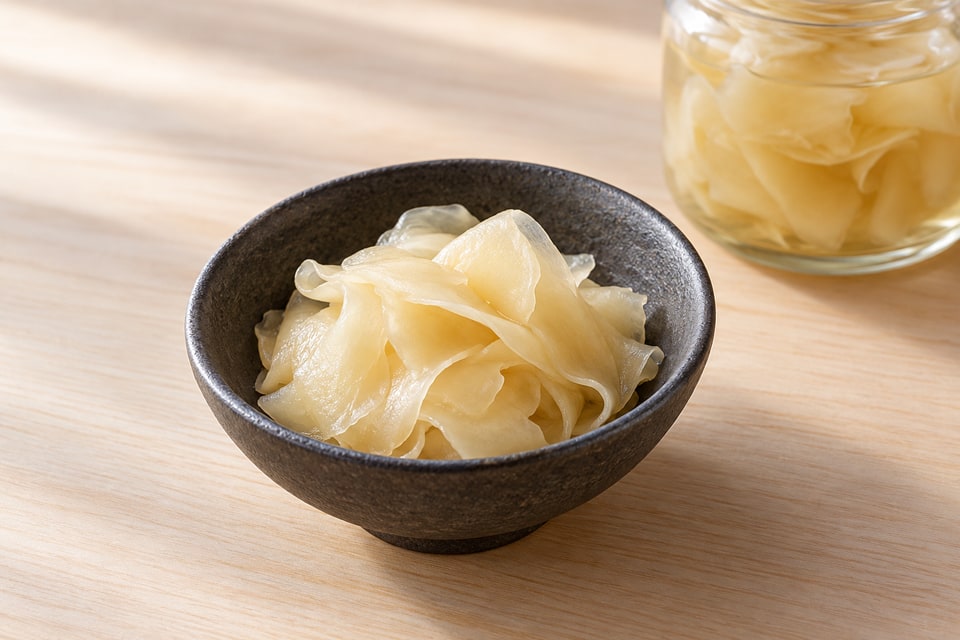
Quantities live in the recipe card.
The egg mixture
restrained liquid and sweetness produce tender joined layers.
The pan film
a thin renewed layer prevents sticking.
Before you begin
Use a small nonstick skillet or tamagoyaki pan, a broad spatula, a fine sieve, and a thermometer. Keep a folded paper towel held with tongs for spreading oil; do not put bare fingers near the hot pan.
The craft, step by step
The complete method.
Read through once before you begin. The working recipe follows below.
The working recipe
Tamagoyaki (Layered Omelet)
Prep: 5–8 minutes · Cook: 8–12 minutes · Total: About 20–25 minutes · Makes one small omelet (about 8 slices)
Ingredients
The egg mixture
The pan film
Instructions
- Whisk eggs, dashi, sugar, soy sauce, mirin, and salt for 30–45 seconds without beating into foam. Strain into a clean bowl over 1 minute for even thin sheets. Checkpoint — The mixture is smooth with no thick white strands.
- Warm the pan over medium-low heat for 1–2 minutes and spread a thin oil film. Pour roughly a quarter of the mixture and tilt for 5–10 seconds to cover the base. Checkpoint — The egg begins setting evenly without smoking or fierce browning.
- Cook the first sheet for 30–60 seconds until mostly set with no flowing puddle, then roll toward one edge with the spatula. Oil the bare pan, pour the next quarter, and lift the existing roll so new egg flows beneath. Checkpoint — The new sheet joins the old roll rather than forming a separate pancake.
- Repeat thin-layer cooking and rolling for 8–12 minutes total, adjusting heat as needed. Finish with a fully set center, confirmed at 71 °C (160 °F). Safety — A pale outside is acceptable, but a wet raw center is not. Checkpoint — The layers are tender and continuous, with no liquid center.
- Rest on a clean plate for 3–5 minutes, then cut with a sharp knife over 1–2 minutes. Shape gently through a clean mat if desired, without squeezing out moisture. Checkpoint — Slices show joined layers and hold without rubberiness.
Troubleshooting
| Symptom | Cause | Fix |
|---|---|---|
| Layer sticks | Bare pan not re-oiled | Renew a thin film before the next pour |
| Wet center | Inner layers never finished | Return to low heat and confirm a fully set center |
| Dark tough surface | Heat too high | Reduce heat and use thinner sheets |
Storage, Make-Ahead & Variations
Serve promptly or refrigerate within two hours, using a shallow covered container, for up to two days at 4 °C (40 °F) or colder. Chill sooner when practical. Reheat leftovers to 74 °C (165 °F); for sushi, use the safely chilled cooked egg according to the assembly recipe. For sweet omelet nigiri, follow that recipe’s sweeter small-batch formula. A round skillet gives a softer outline but the same layering method.