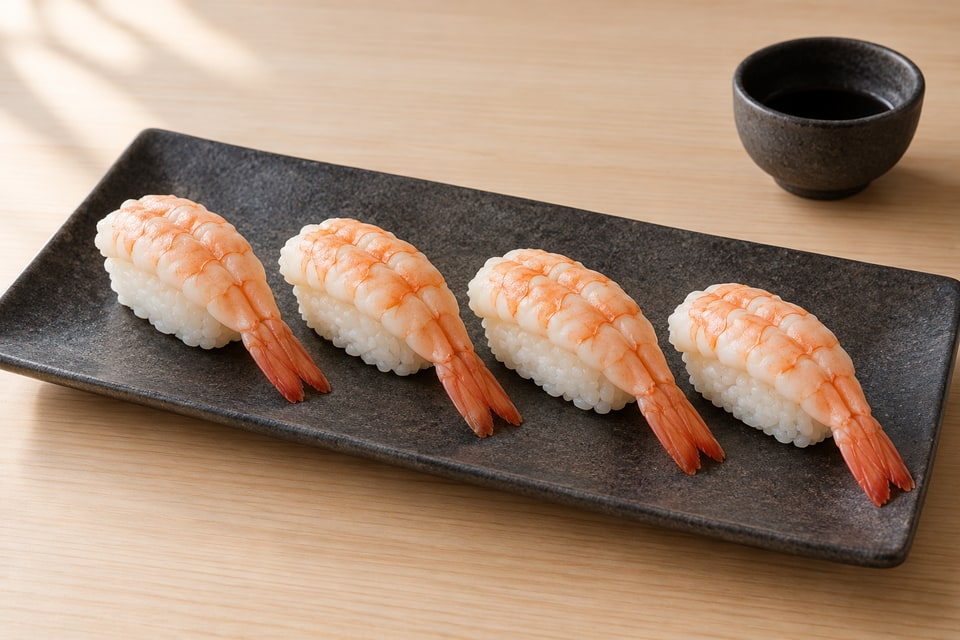
Cooked Shrimp Nigiri
Cooked shrimp nigiri is a useful lesson in shaping because the topping is firm enough to handle and every part can be fully cooked.
Open recipeThe Sashimee collection
Fifty complete recipes. Choose a familiar favorite, or learn something new.
Cooked shrimp nigiri is a useful lesson in shaping because the topping is firm enough to handle and every part can be fully cooked.
Open recipe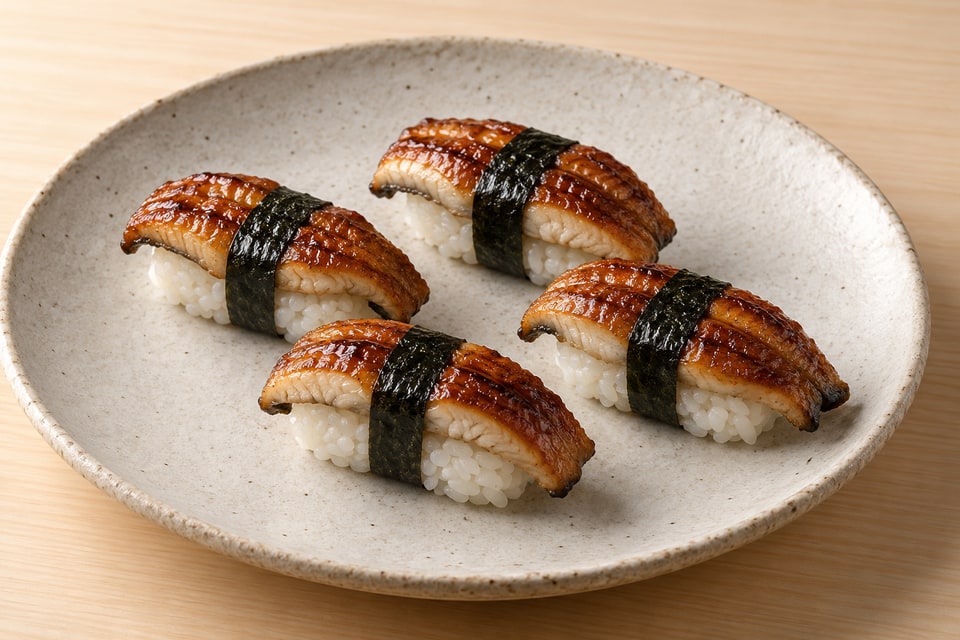
Unagi nigiri uses fully cooked eel. The rich flesh is commonly sold already grilled and glazed as kabayaki, which makes the home recipe a careful reheating and portioning task.
Open recipe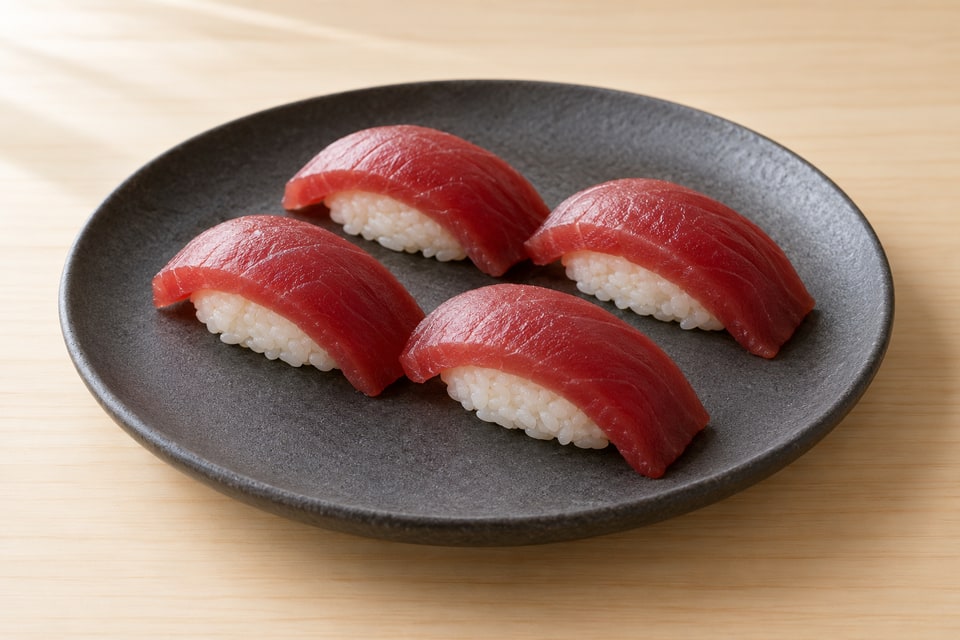
Lean tuna, or akami, is judged by a quiet cut. Its muscular grain is more apparent than salmon’s, and a sinewy strip remains chewy no matter how finely it is arranged.
Open recipe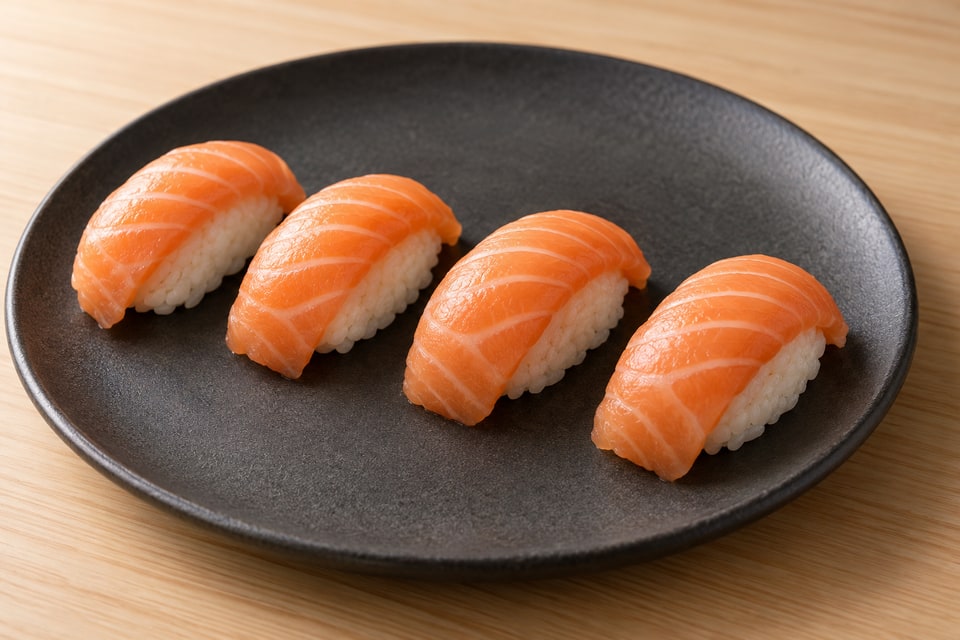
Salmon nigiri asks for a clean, supple slice rather than an elaborate garnish. The pale fat lines should run across the bite, and the broad surface should settle over the rice without being pushed into place.
Open recipe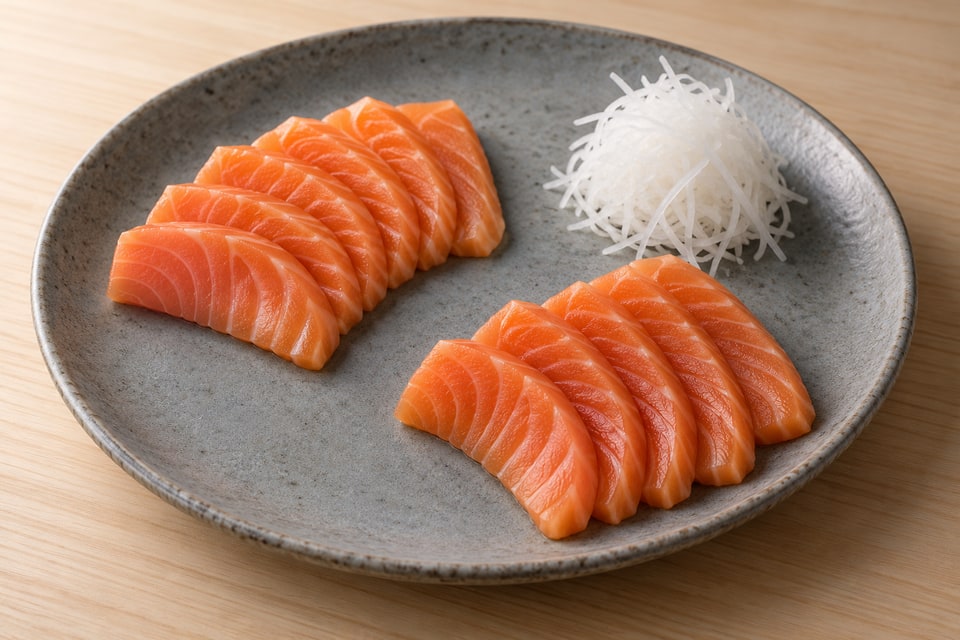
Salmon sashimi is an exercise in cutting and service rather than cooking. The block should be properly sourced for raw consumption, kept cold, and sliced across its muscle grain with a clean pull of the blade.
Open recipe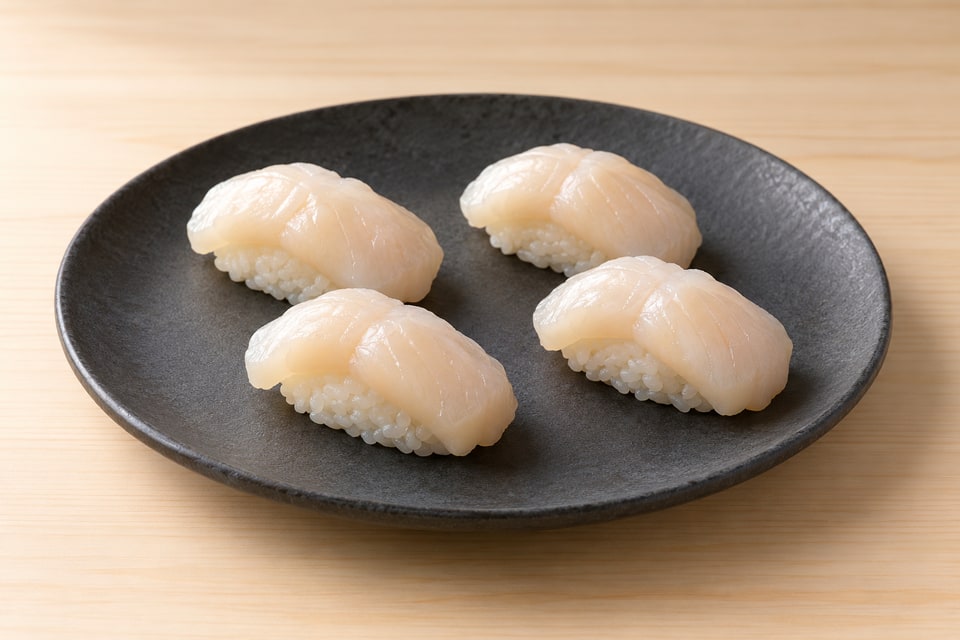
Scallop nigiri depends on the texture of the adductor muscle, the firm round part sold as a sea scallop. Dry-packed scallops are preferable because added water makes both handling and flavor less predictable.
Open recipe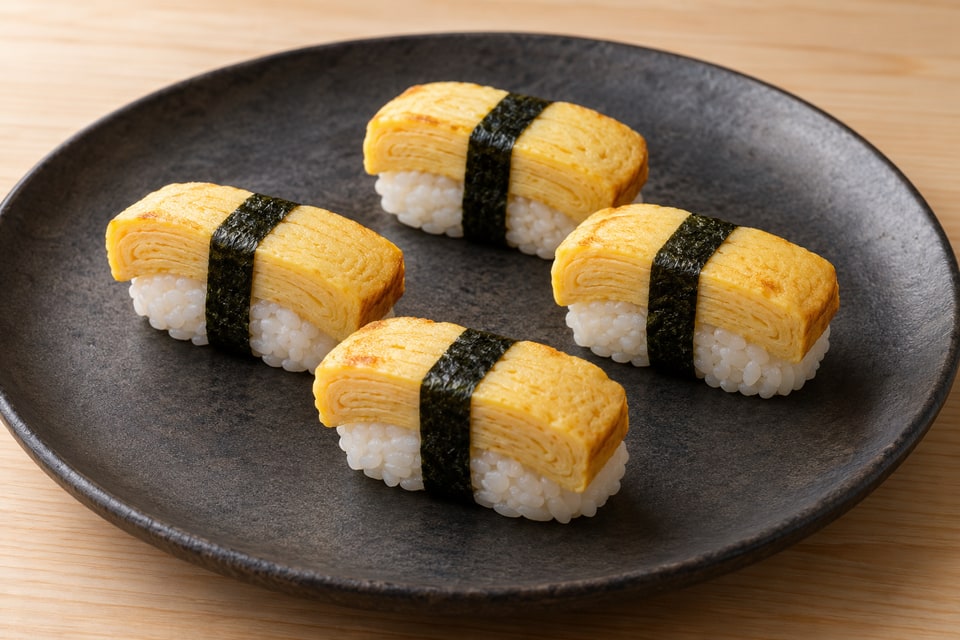
Sweet omelet nigiri brings a soft, lightly sweet layer to the sushi counter. The egg is cooked as tamagoyaki, a rolled omelet built from thin sheets, then cut into neat slabs.
Open recipe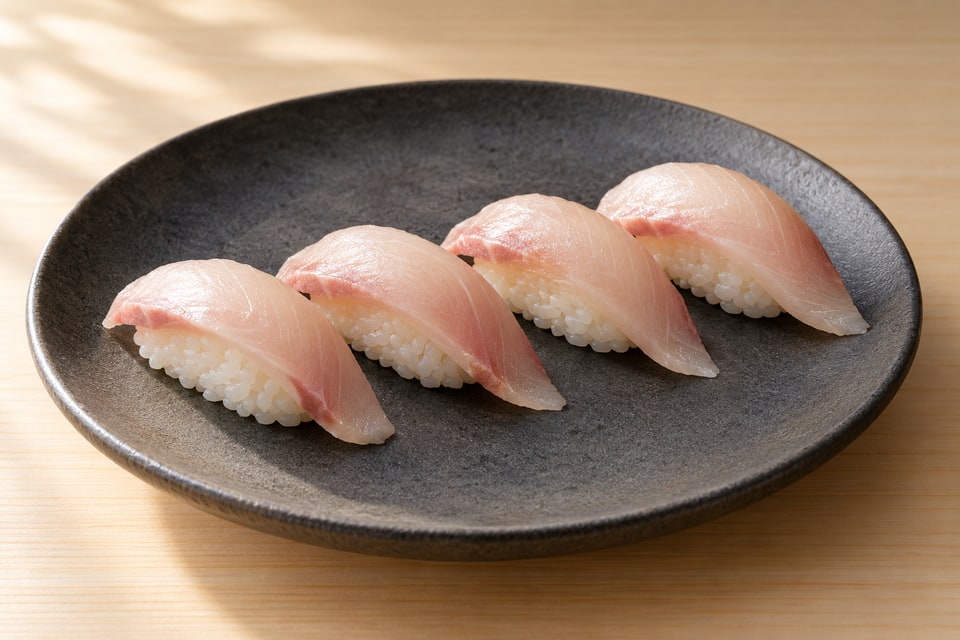
Yellowtail brings a mild, buttery richness without needing a glaze. The clean loin is easier to slice than a thin belly flap, and a narrow removal of the dark bloodline helps the fish’s sweetness remain distinct.
Open recipe